A Kivoai Creative game

A town where wishes come true. Eventually.

A gentle, money-free city builder: residents wish, the council agrees, you find the spot.

Coming to Steam

  • No money
  • Nobody has to work
  • Wishes come true
  • Cats and robots
  • Music written in code
  • 10 languages
  • Day/night cycle
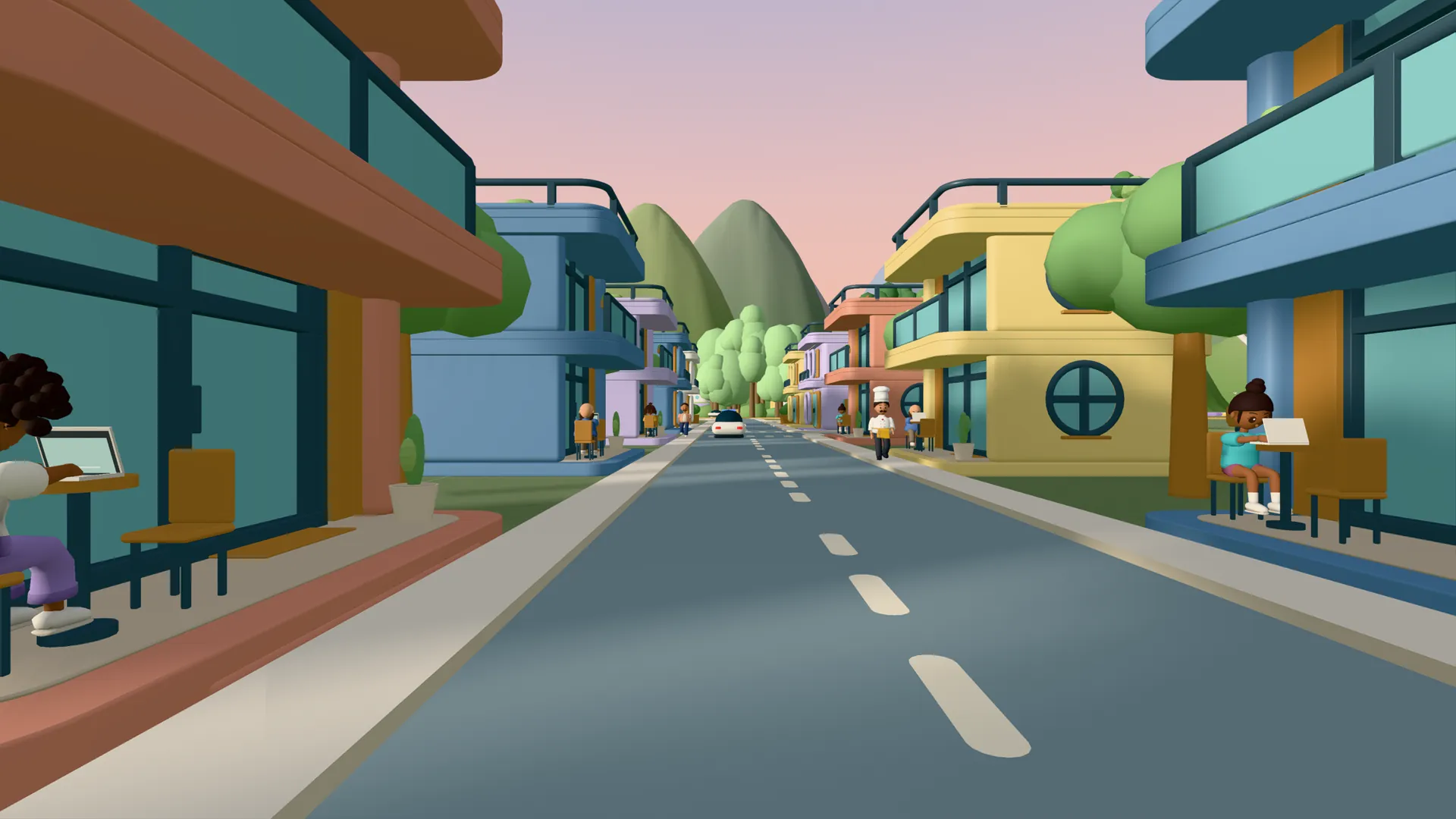
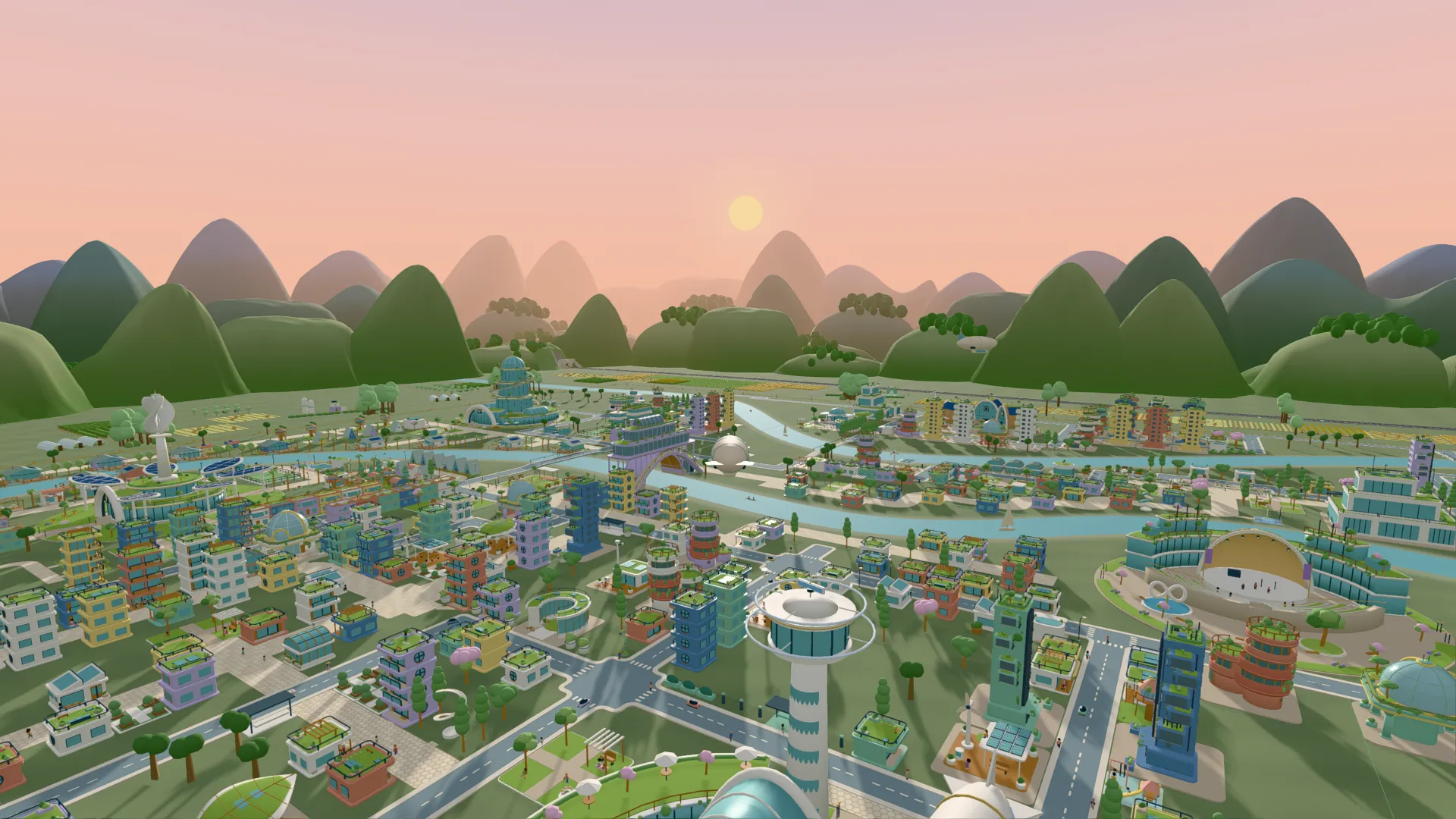
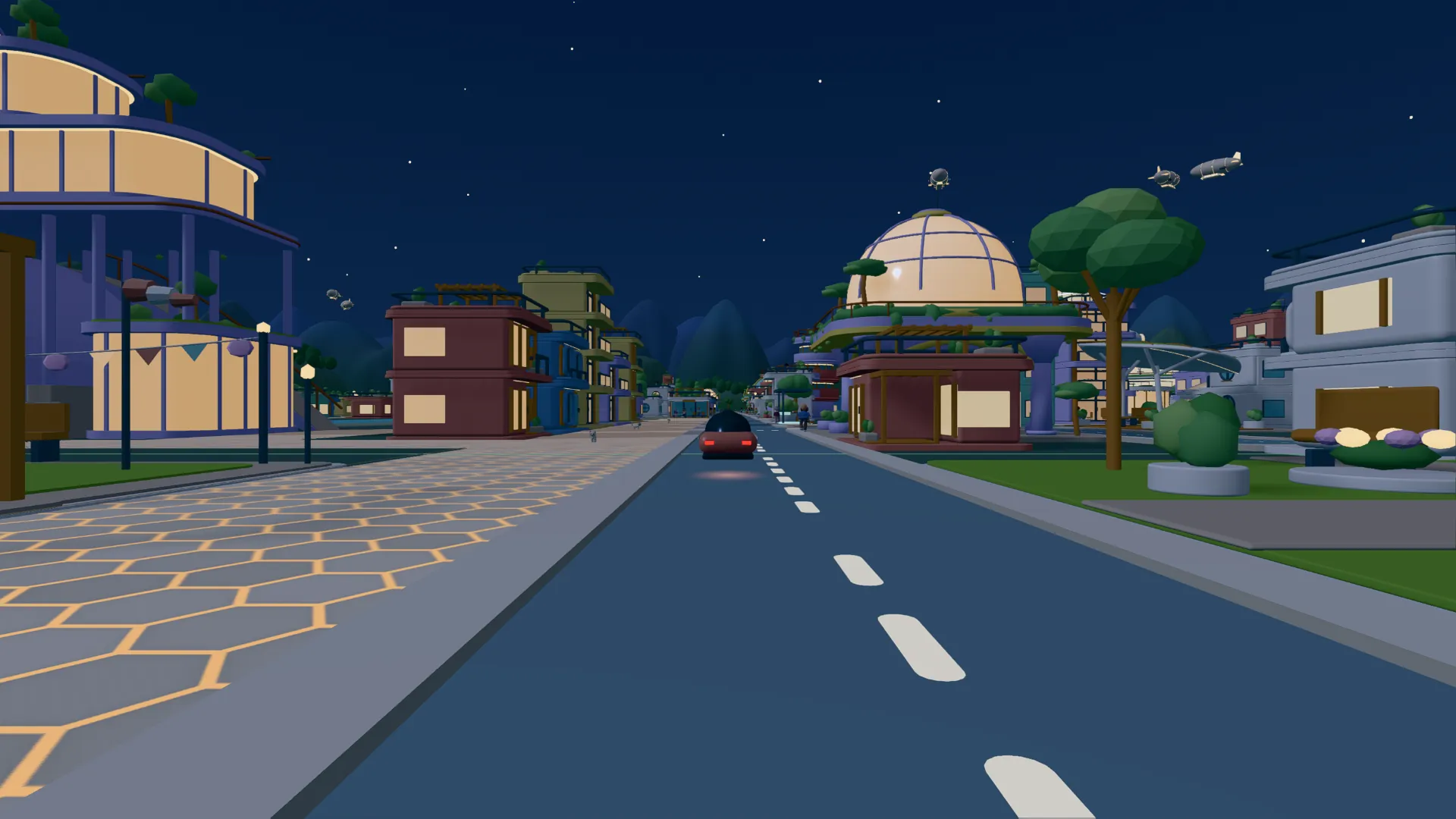
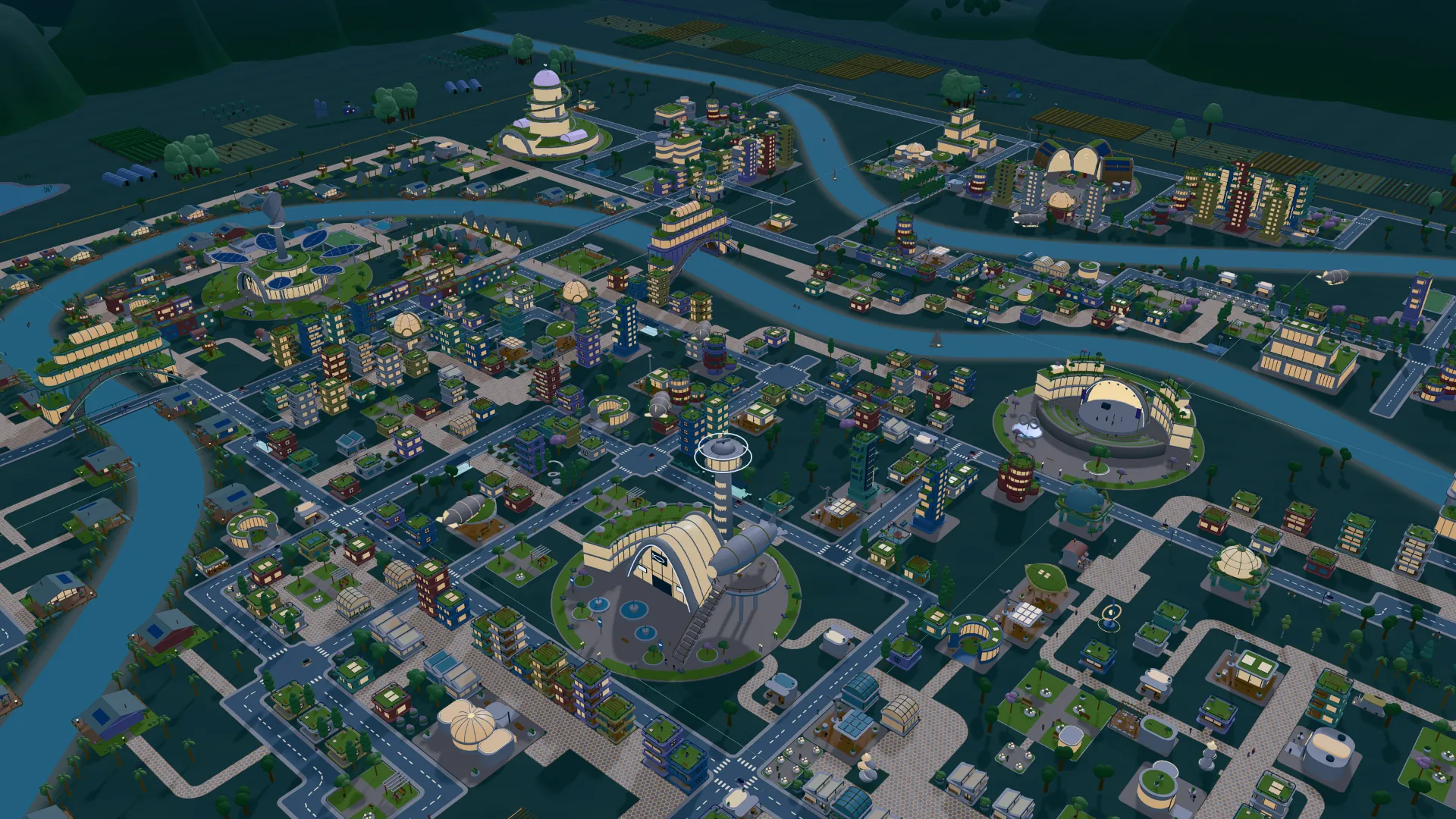
In game: a street between colourful homes, residents on their verandas, mountains behind In game: the town spread along both banks of the river, the sun setting behind the mountains The same street at night: lit windows, a domed building and vehicles flying overhead

The game

No score, no timer,
no losing.

Build a small town and listen to the people in it. Someone makes a wish, the council agrees, and you find the right spot for it. There is no money and nobody has to work; the town grows through wishes. Cats and robot neighbours wander the streets, and windows glow at dusk.

  1. 01No money

    Nobody in town earns or pays; the town grows through wishes.

  2. 02Wishes come true

    Residents make a wish, the council agrees, and you find the right spot. Eventually.

  3. 03Council terms

    The town grows step by step over council terms, each bringing new wishes.

  4. 04Cats and robots

    Cats explore the streets; robots are neighbours with names, moods and wishes of their own.

  5. 05Music written in code

    The soundtrack was composed in code and synthesised from scratch.

  6. 06Day, night, 10 languages

    The town changes light through the day, and the game plays in 10 languages.

Wish Town is coming to Steam.

In game · playwishtown.com

Same camera,
day and night.

Screenshots from the game. Drag the line and let the moon take the sun's place.

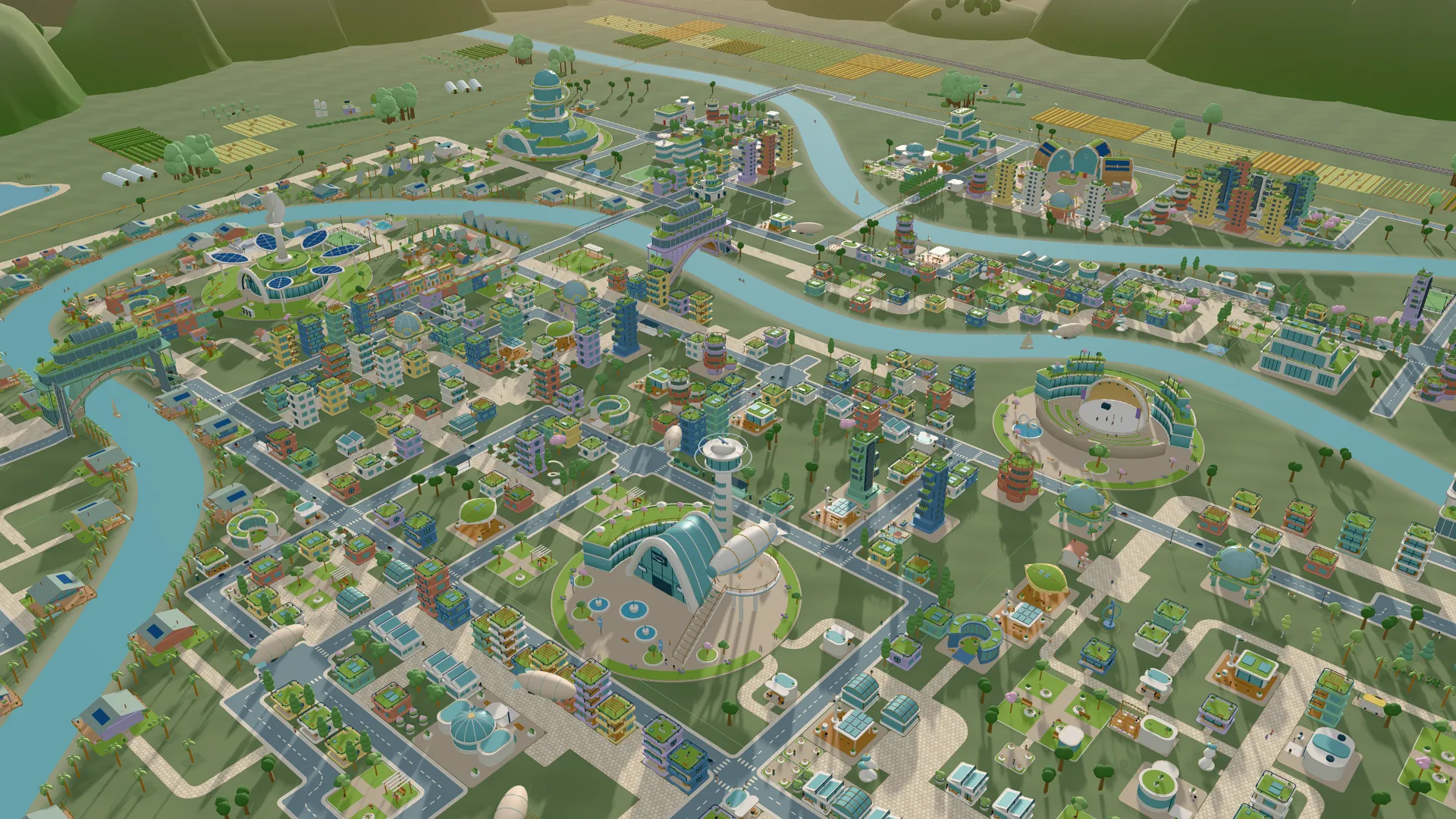
In game, from above: the town with the river winding through it, by day The same view at night: windows and streets lit up
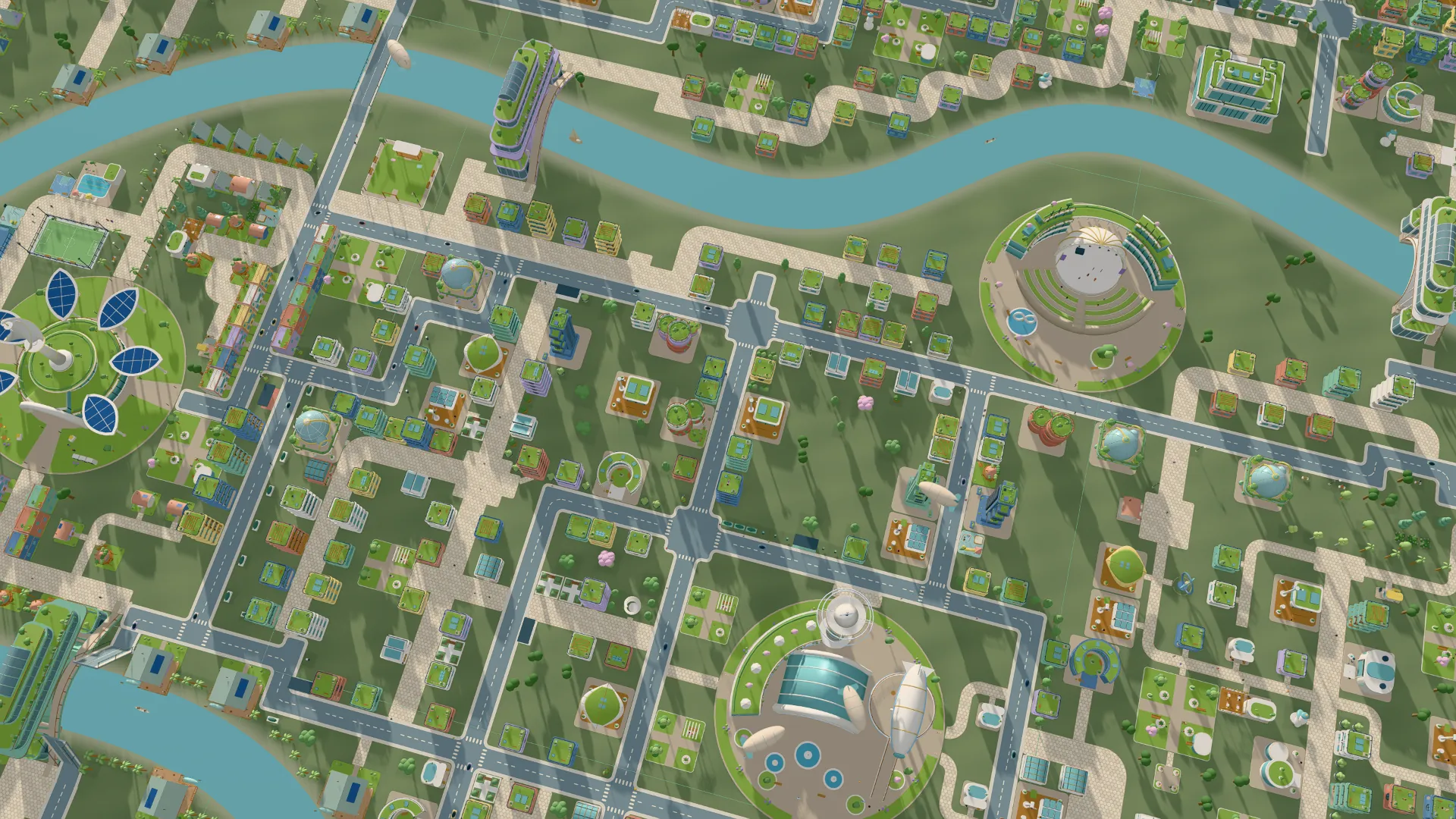
In game, top-down: river, roads, homes and parks, by day
From above: river, roads and parks
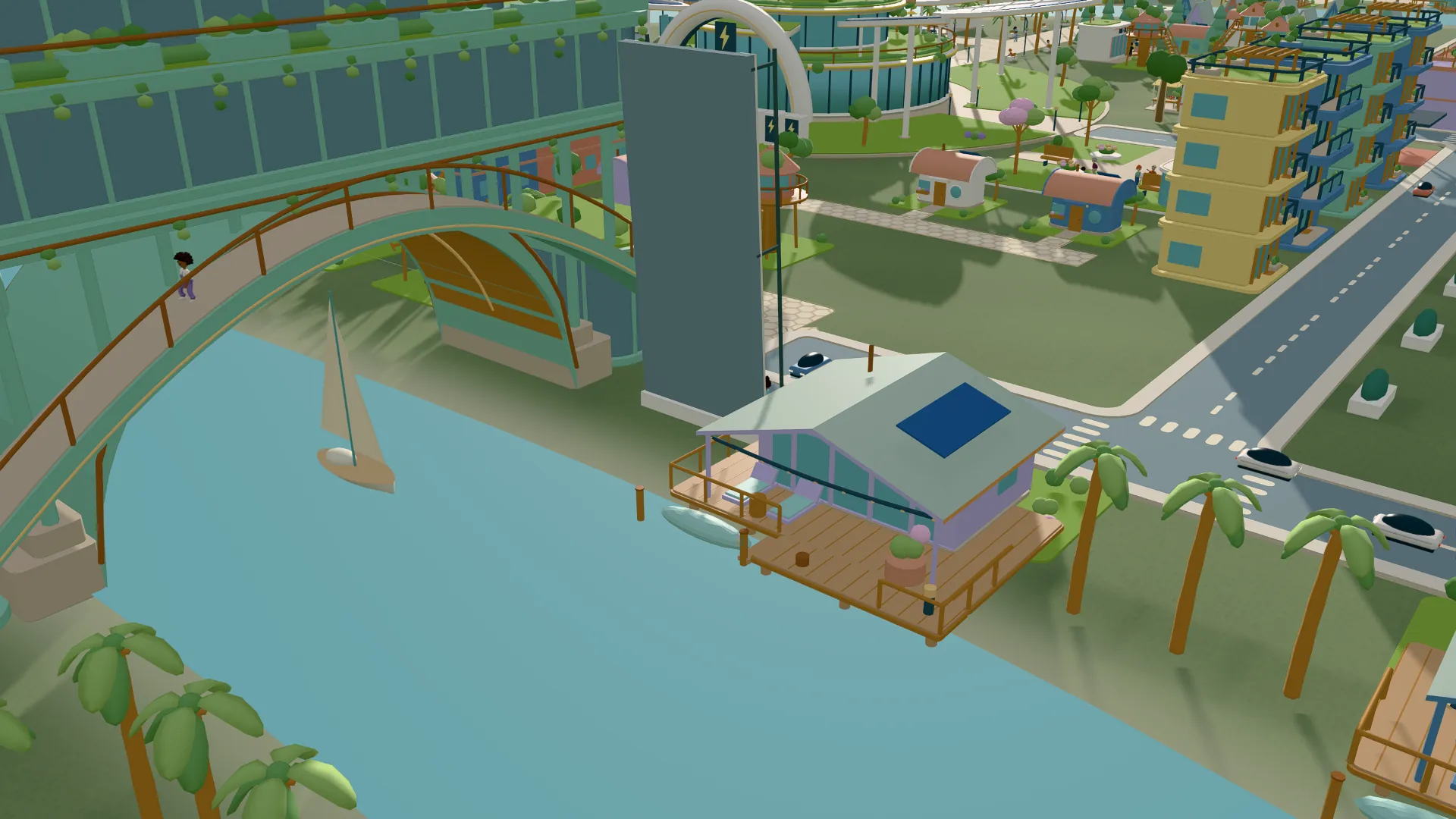
In game: a footbridge over the river, a sailing boat and a house with a jetty on the bank, by day
Bridge and river
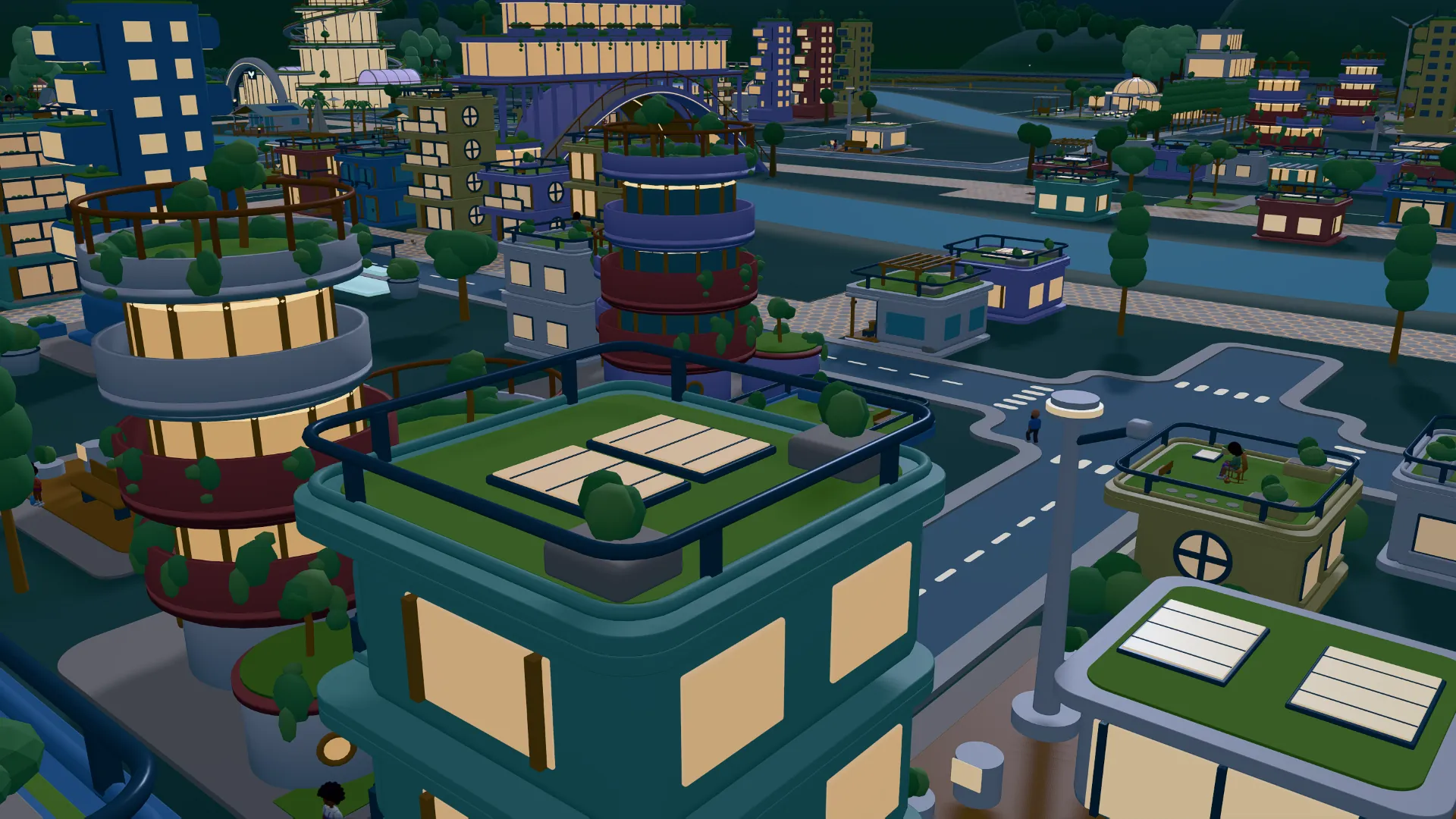
In game: homes with roof gardens at night, lit windows and street lamps
Night lights
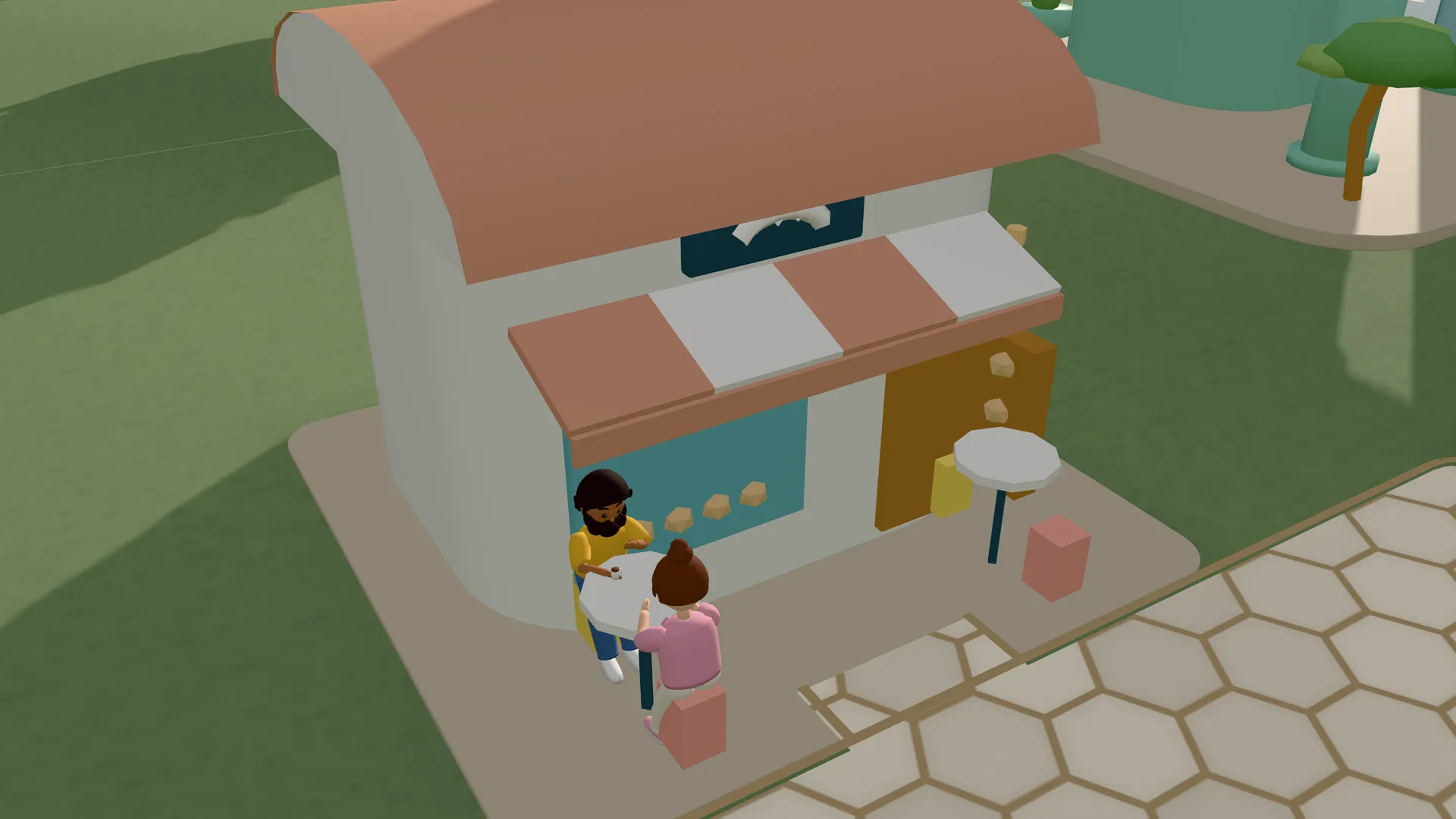
In game: two residents chatting at a table outside the bakery, by day
Outside the bakery
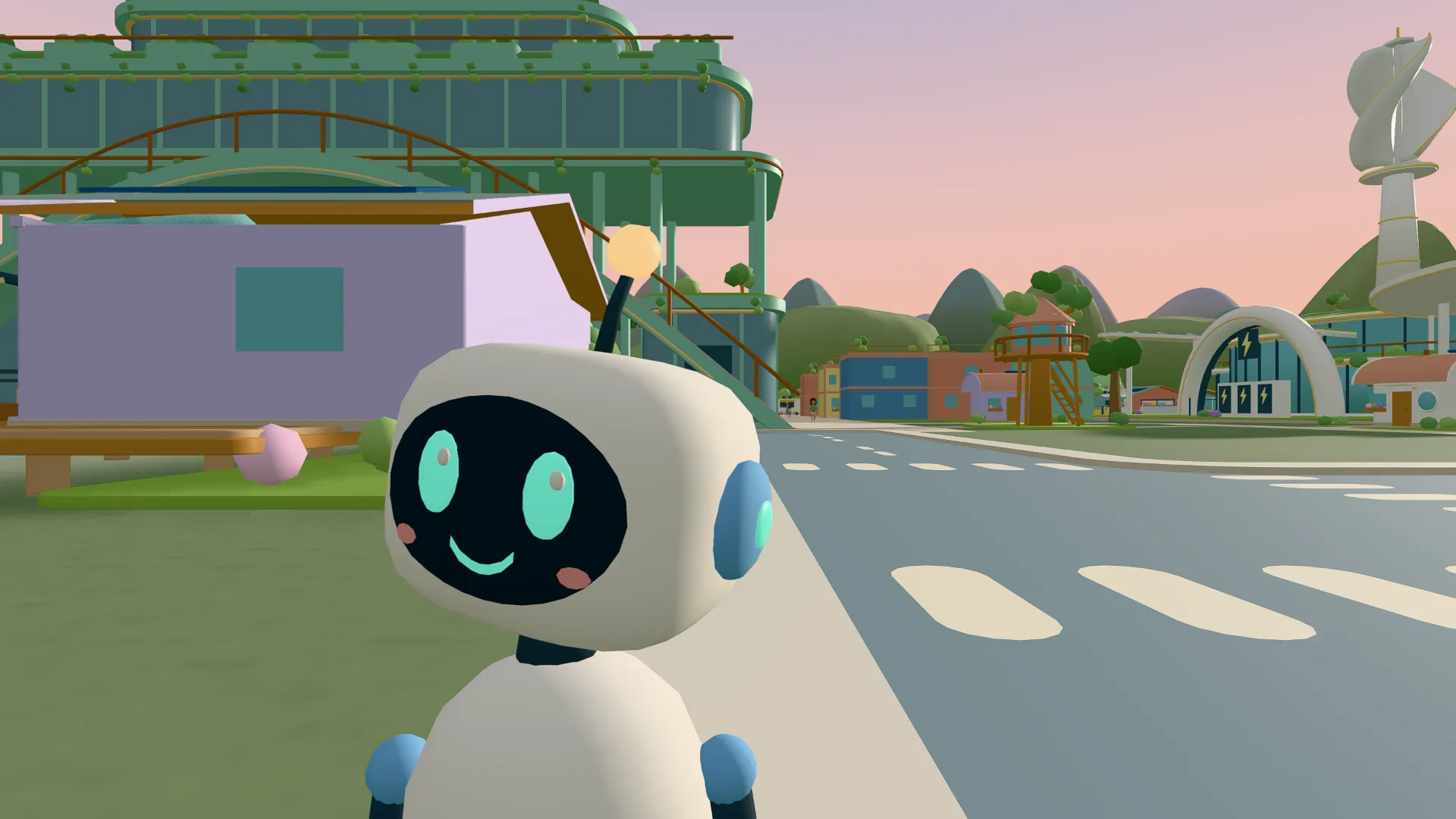
In game: a smiling robot neighbour with a screen face on the street, by day
Robot neighbour

Residents

A story
from every home.

Reading on the veranda, yoga on the roof, guitar in the park. The residents of Wish Town came from different places and found the same neighbourhood.

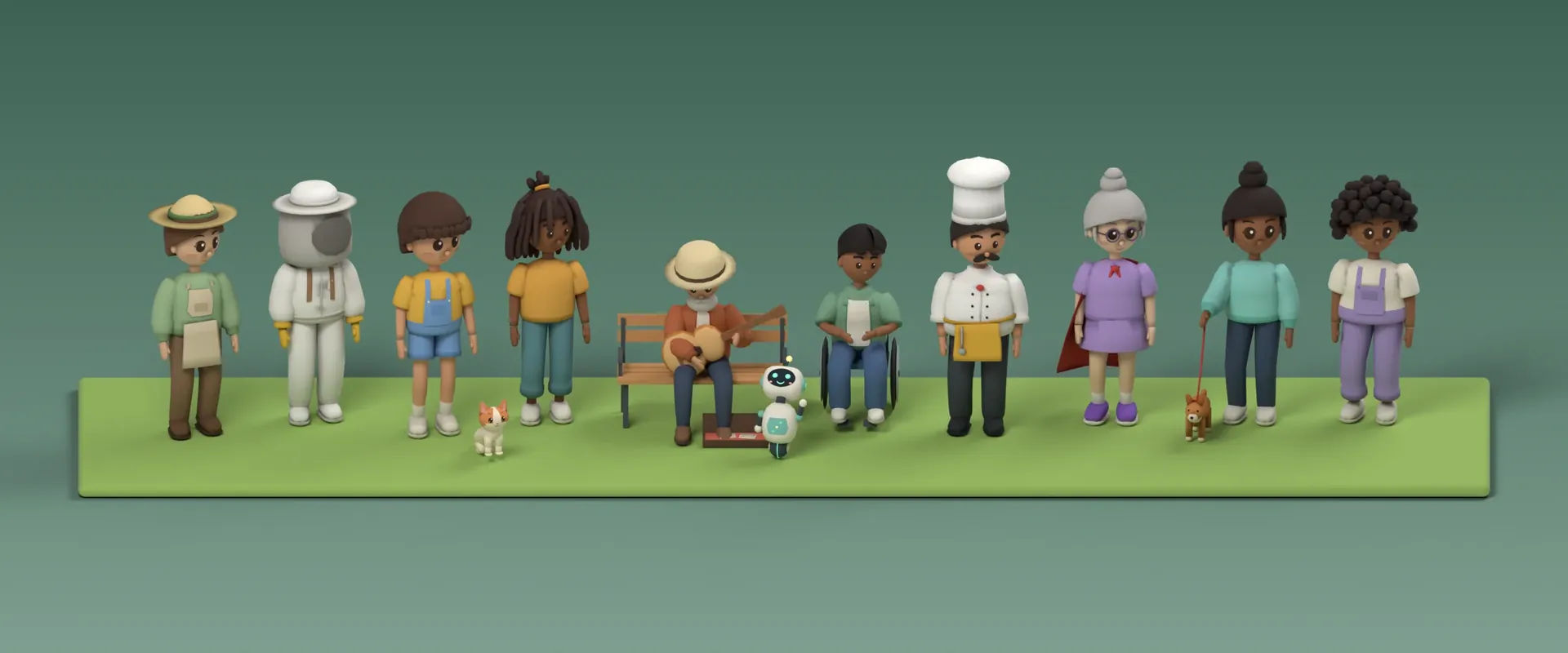
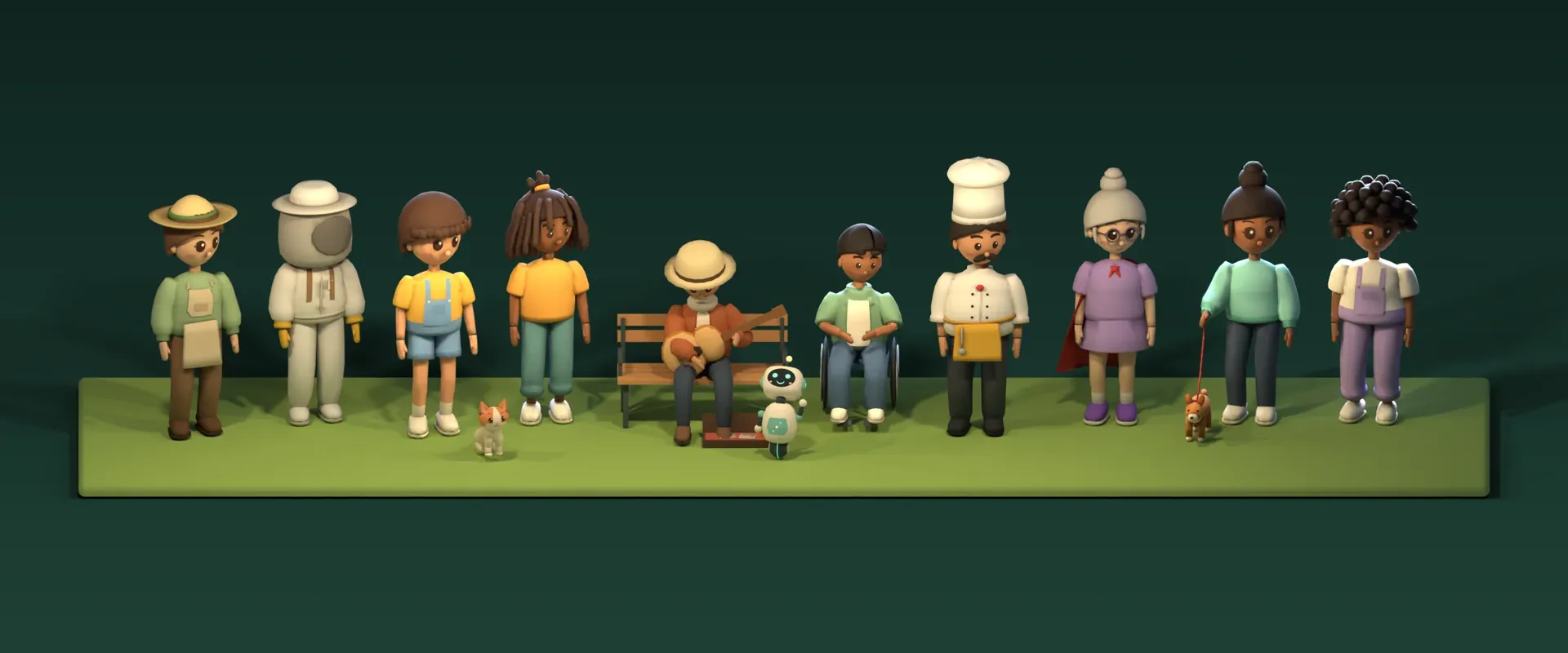
The residents side by side: ten neighbours of different ages and cultures, a robot and a cat The same residents at night: ten neighbours of different ages and cultures, a robot and a cat

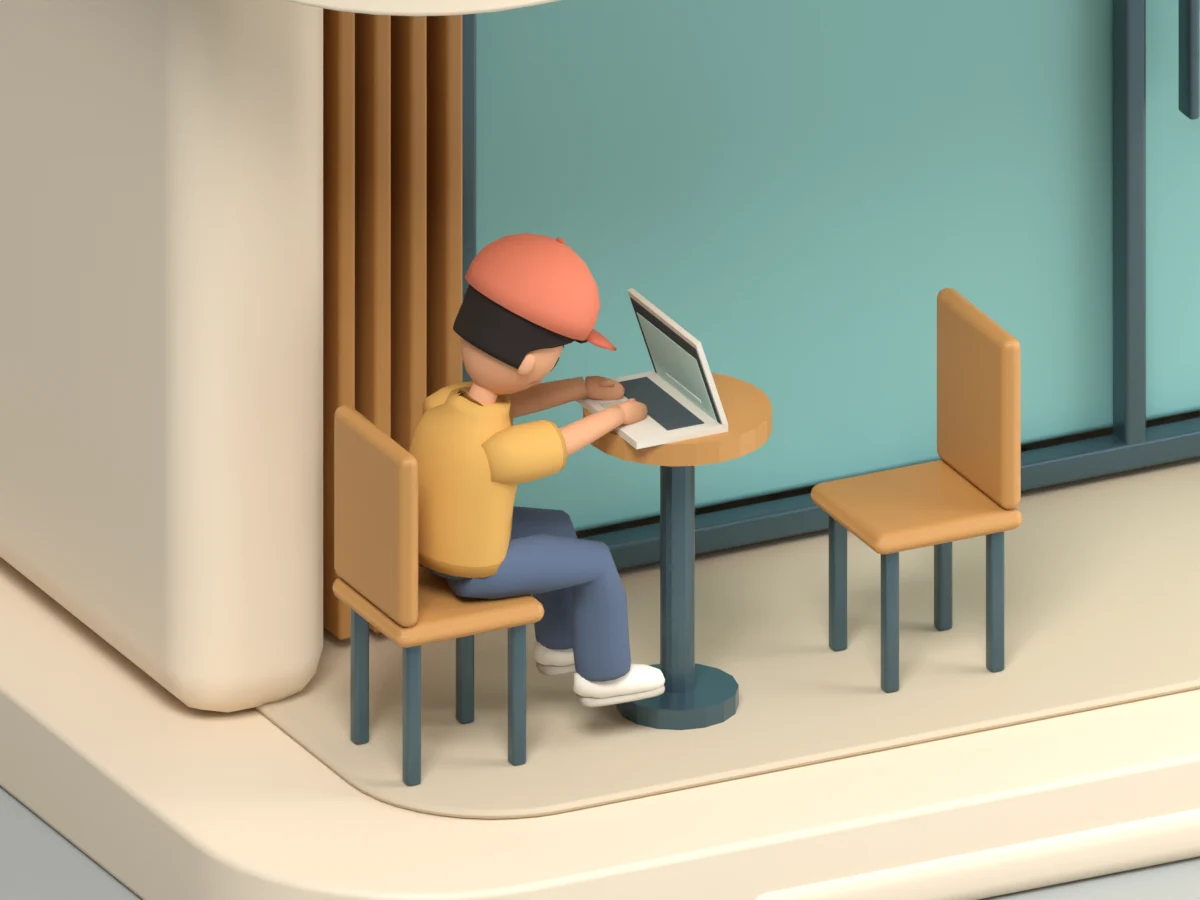
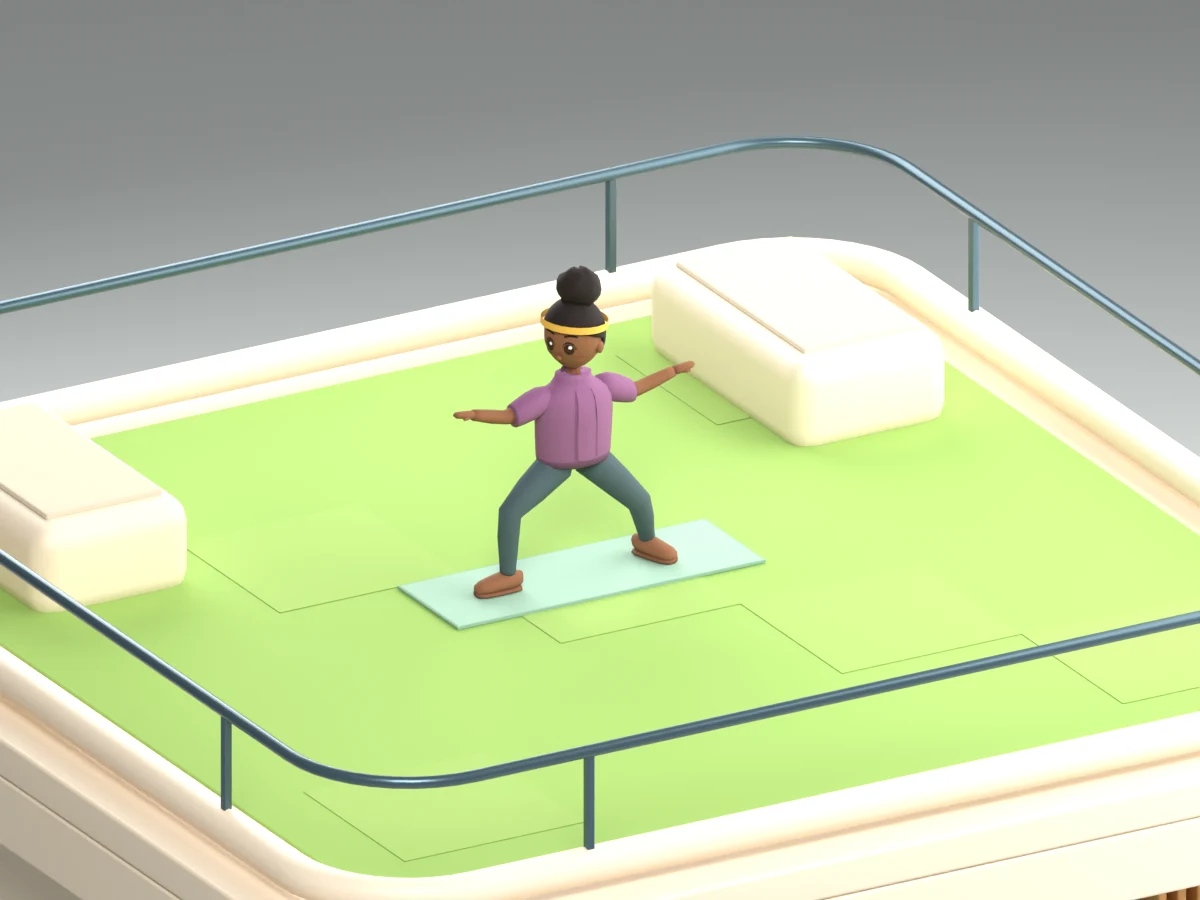
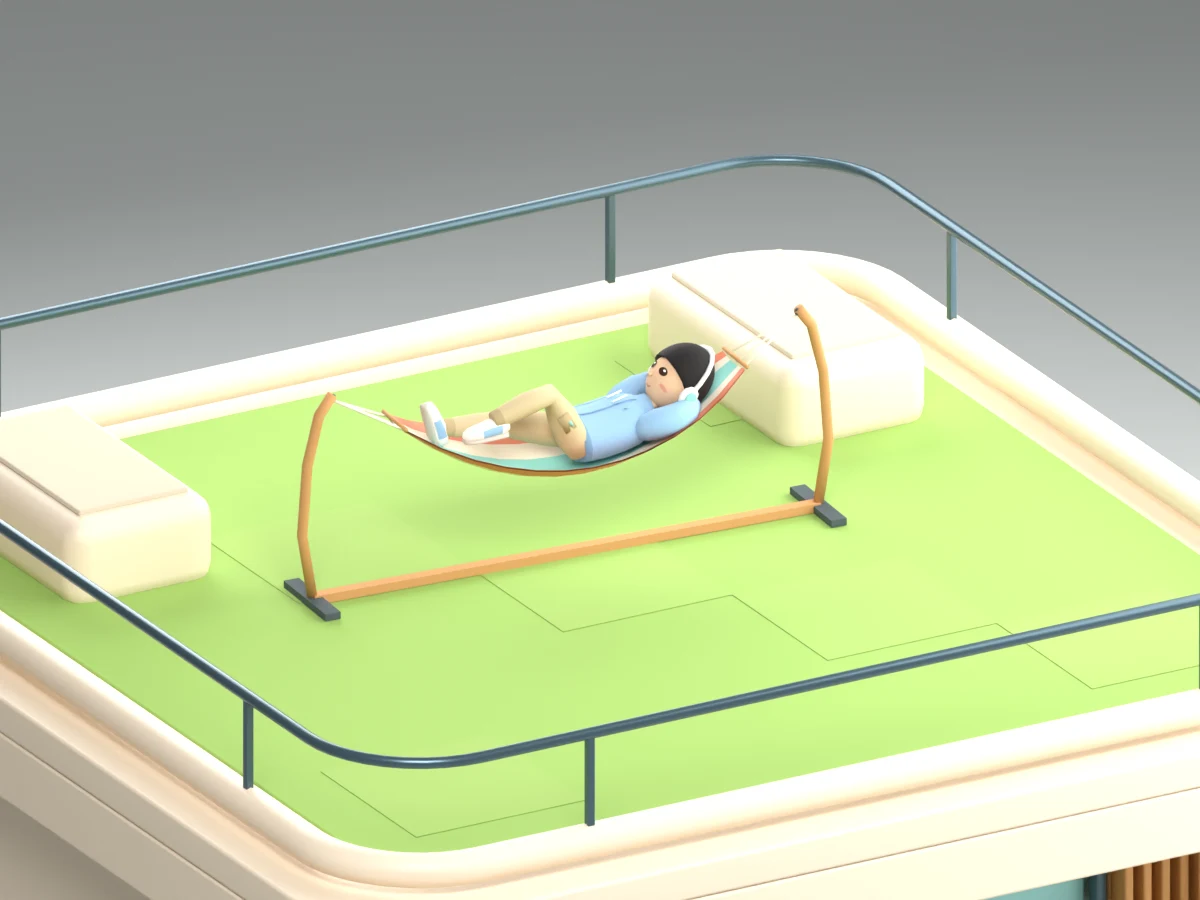
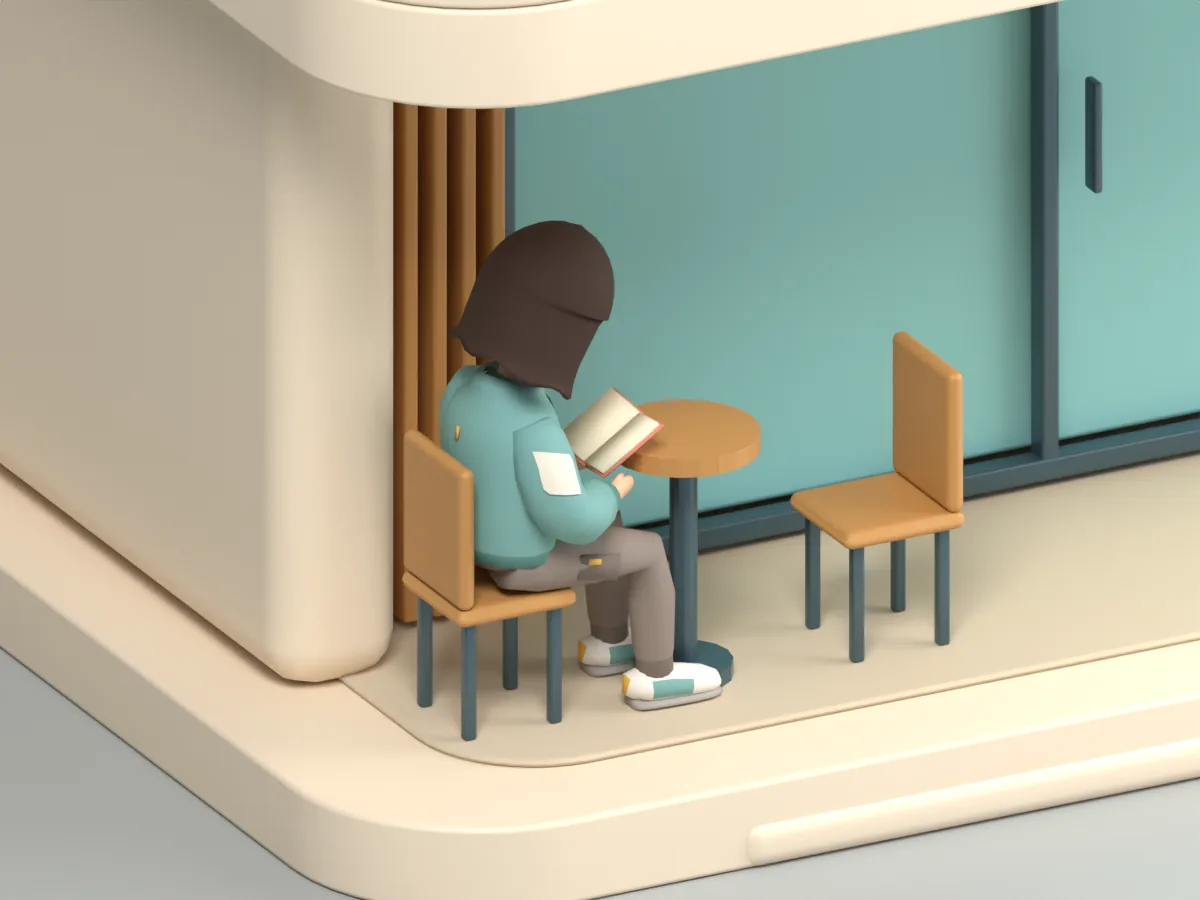
In Wish Town every home brings a resident, and every resident is lost in their own little routine. One reads on the veranda, another works on a laptop at the table. Someone flows through yoga on the roof terrace, someone else drifts in a hammock with headphones on, swaying gently.

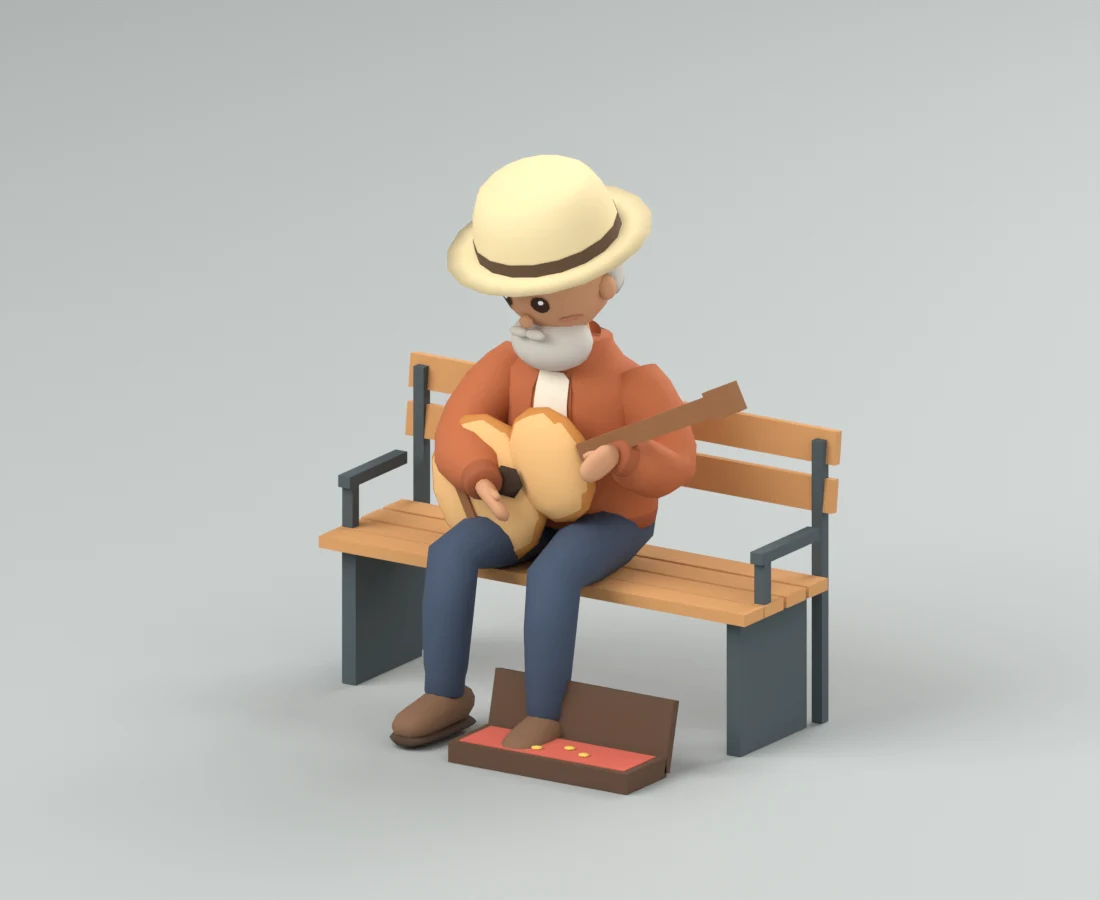
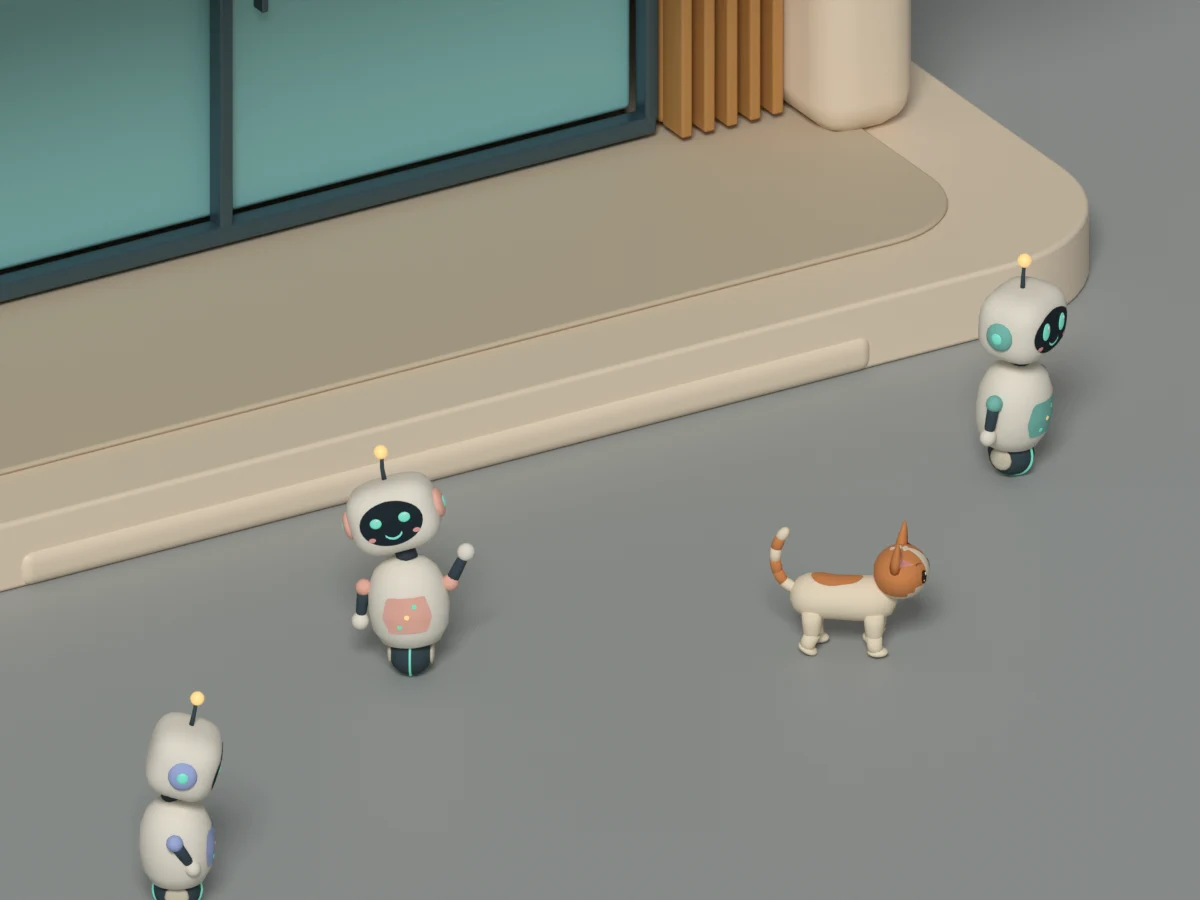
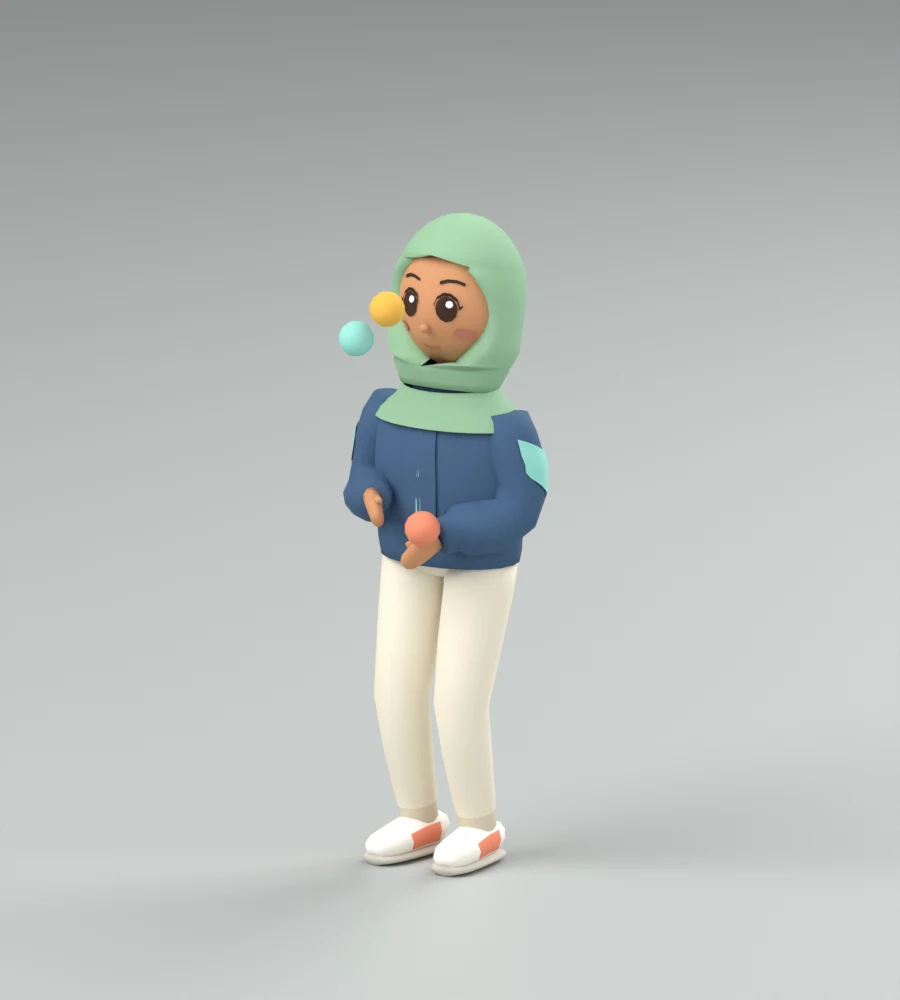
The streets are never empty either. On a park bench a grey-bearded gentleman strums his guitar, a few coins in the open case at his feet. In the square a young woman in a headscarf keeps three bright balls in the air. In between, cats wander out of their homes and one-wheeled robot neighbours with screen faces roll around; they have their own moods and wishes too.

Our residents come from different cultures, ages and walks of life and have found their way to the same neighbourhood. We tell that story through skin tones, hair textures, faces, ages and everyday habits rather than costumes. They all belong to one friendly design family: soft rounded shapes, pastel colours and a shared scale that fits every corner of the town.

Under the hood each resident is a single mesh with a single material on a shared skeleton, which makes new activities easy to add and keeps even a busy town running smoothly.

Resident in a cap working on a laptop at the veranda table
Laptop on the veranda
A grey-bearded gentleman playing guitar on a park bench, open case at his feet
Guitar in the park
A resident doing yoga on the roof terrace
Yoga on the roof
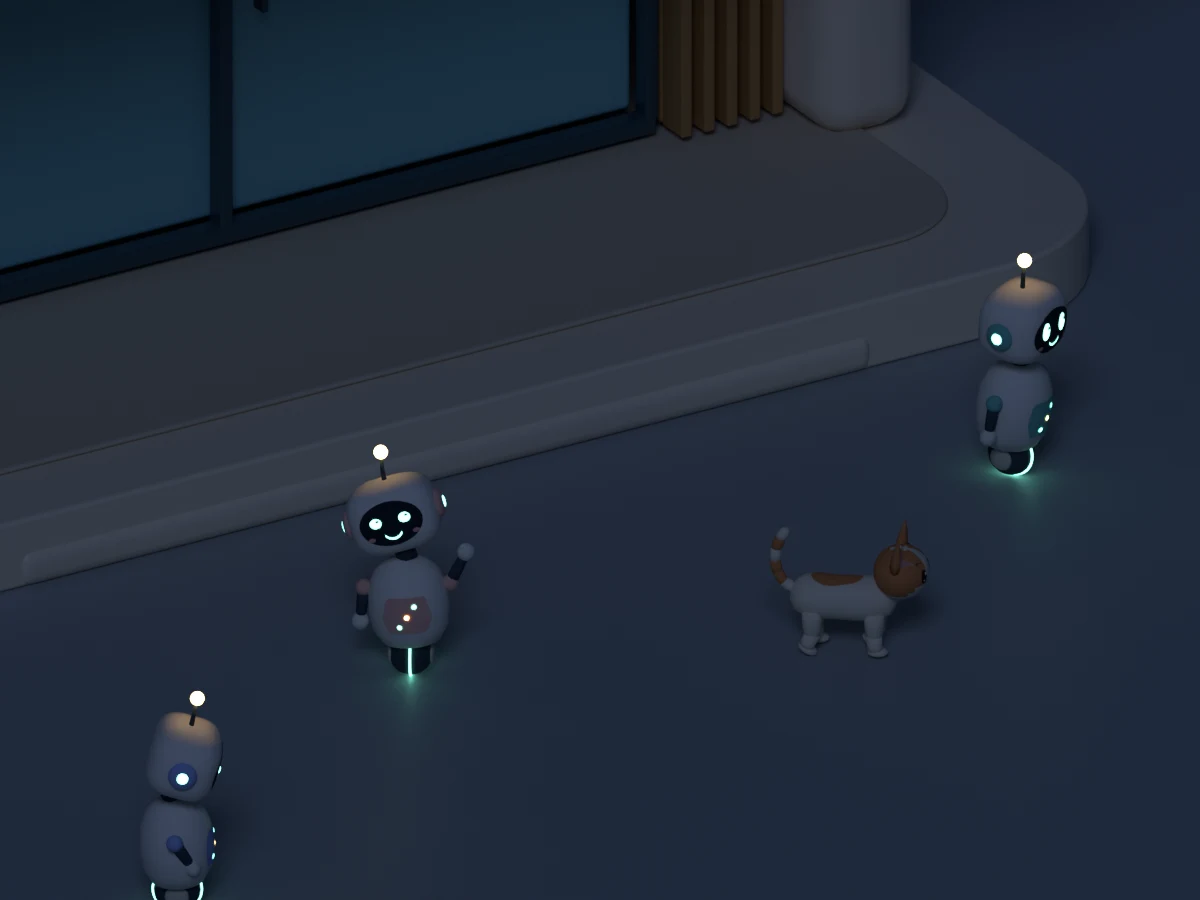
Robots in different colours and a cat on the street, by day
Robot neighbours
A young woman in a headscarf juggling three balls
Juggler
A young resident with headphones swaying in a hammock on the roof terrace
In the hammock
Resident reading on a home's veranda
Reading on the veranda
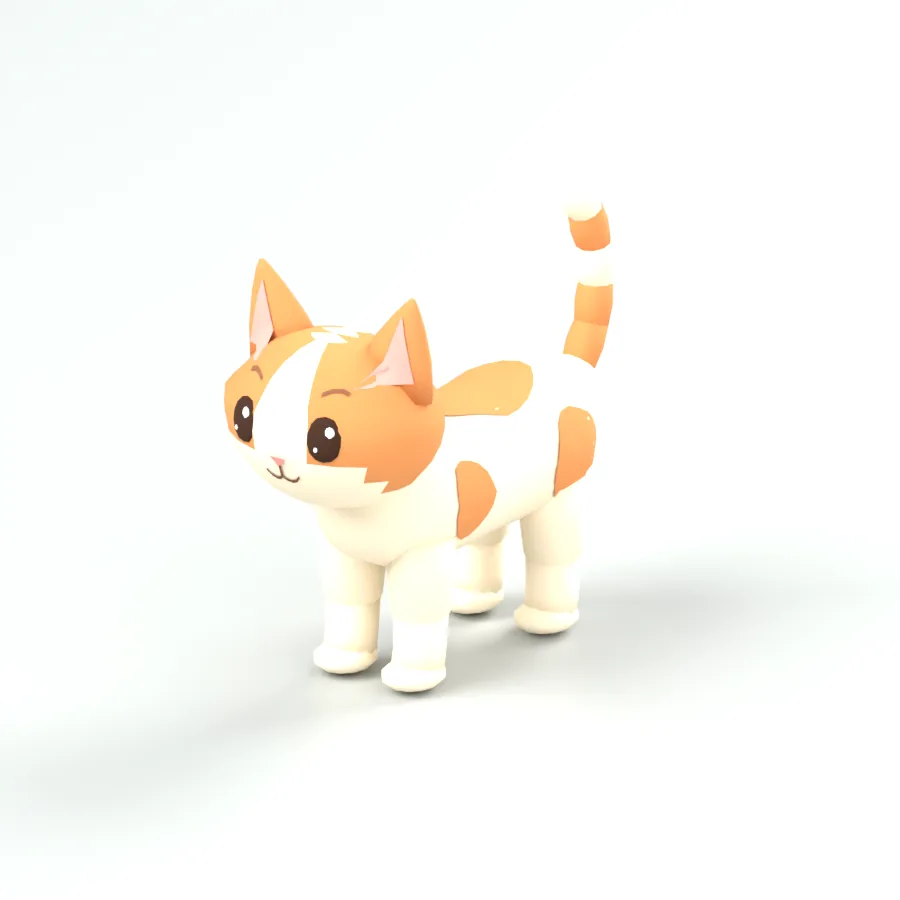
Orange-patched street cat, standing
Street cat
Robots in different colours and a cat on the street, at night
Robot neighbours at night

3D showcase

Spin it,
look closer.

Real models from the game. Drag to rotate; the cat walks, the robot rolls, the residents do yoga, sway in a hammock, play guitar and juggle, and the energy hub's turbine spins.

  • Loading 3D models…

    Street cat2,570 triangles · 4 animations

  • Loading 3D models…

    Robot neighbour4,832 triangles

  • Loading 3D models…

    Resident with a laptop5,343 triangles

  • Loading 3D models…

    Resident doing yoga4,921 triangles

  • Loading 3D models…

    Resident in a hammock6,075 triangles

  • Loading 3D models…

    Guitar player6,457 triangles

  • Loading 3D models…

    Juggler5,529 triangles

  • Loading 3D models…

    Capsule Home14,852 triangles

  • Loading 3D models…

    Community Energy Hub10,168 triangles

How we make our assets

Every home is built
from lines of code.

Every building, cat and resident in Wish Town is produced by re-runnable Blender scripts, not by hand-clicking. Changing a colour, a window or a dimension is a single line, and the whole city keeps speaking the same visual language.

  1. 01Concept

    It starts with a visual reference: the feeling of a home, a cat character, a road texture. References inspire; geometry is always original.

  2. 02Plan

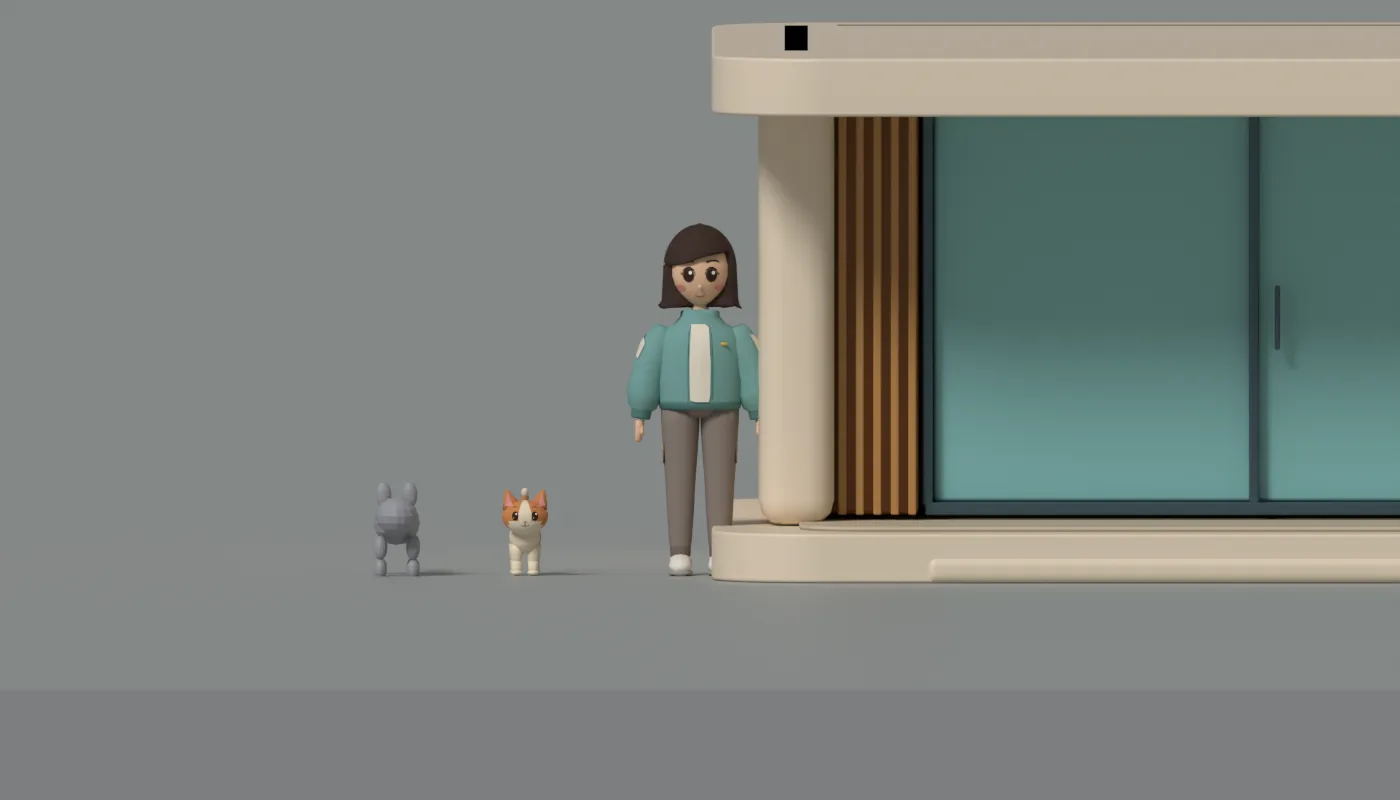
    Each asset gets a footprint, floor behaviour, material roles and a triangle budget. Scale is fixed: a person is 0.60 units, a ground floor 0.9.

  3. 03Scripted build

    A Python script running headless Blender builds the model, authors its animations and checks every frame that it stands on the ground.

  4. 04Verification

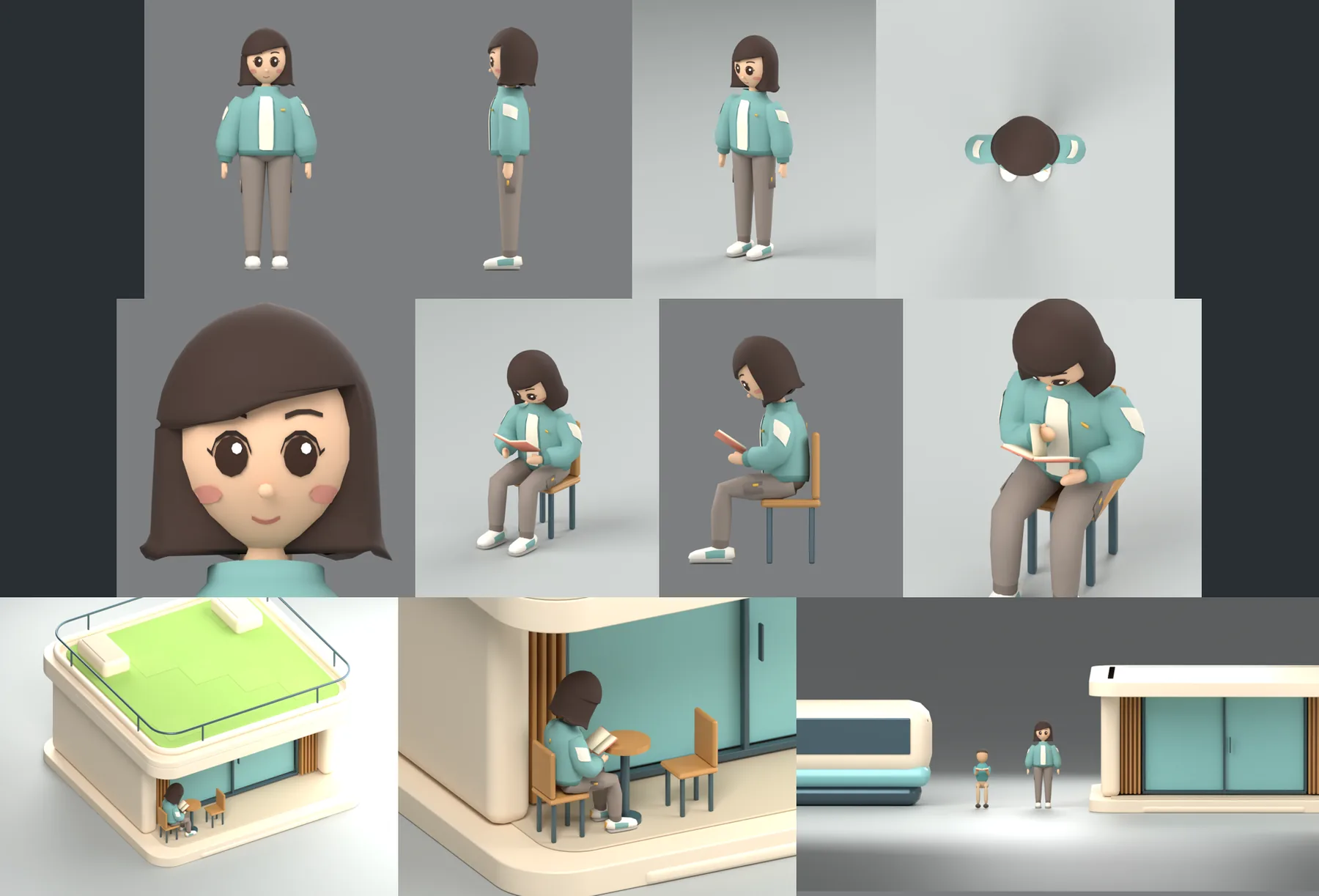
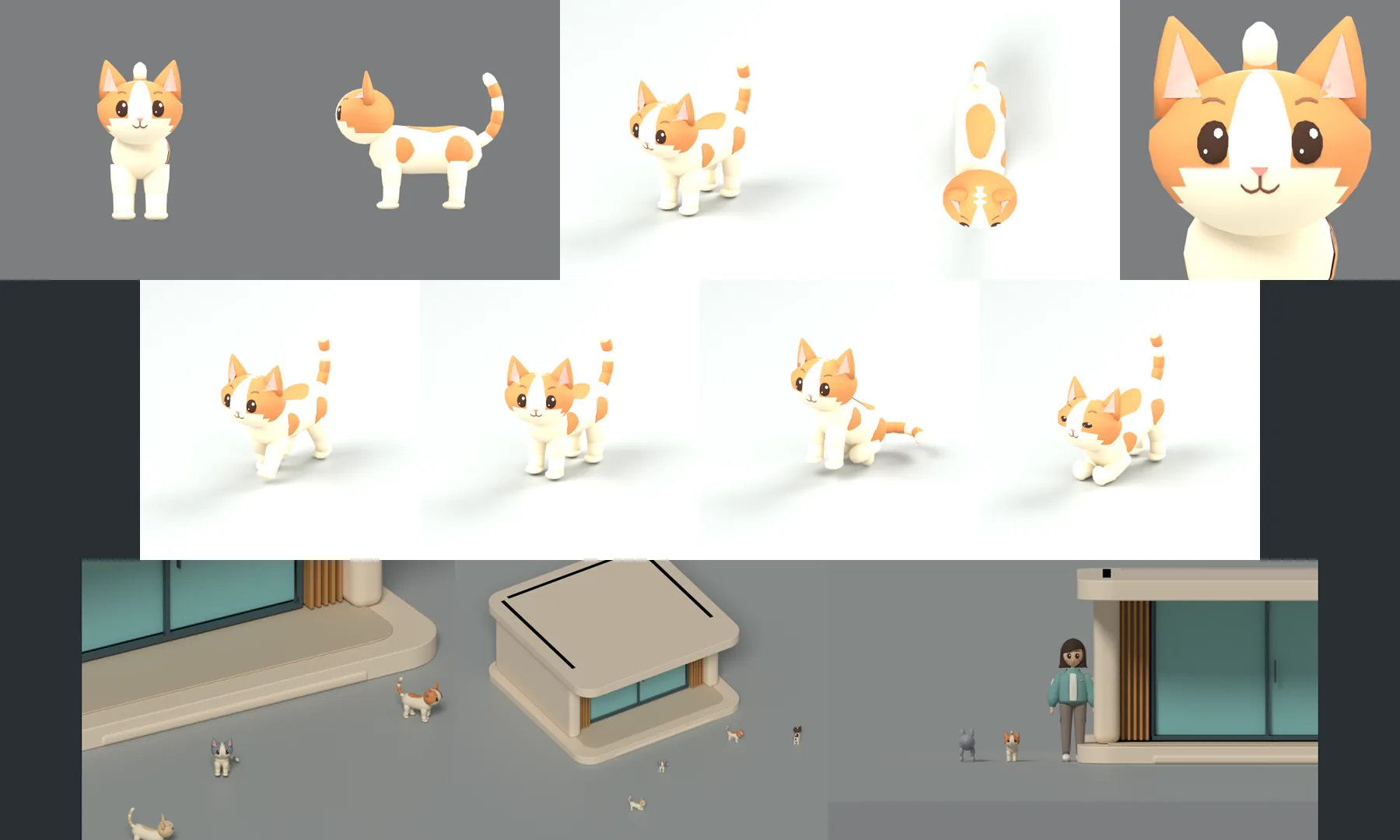
    Front, side, three-quarter and top renders, a scale line-up next to homes, then a load test in the game's own 3D engine. Colours are tuned under the game's real day and night light.

  5. 05Delivery

    The approved model is frozen with a version number and recorded with a fingerprint (SHA256). A change is a new version; old versions are never deleted.

Front, side, top and pose render sheet for the resident
Turnaround · resident
Front, side, top and pose render sheet for the cat
Turnaround · cat
Scale line-up: cat, resident, home
Scale line-up
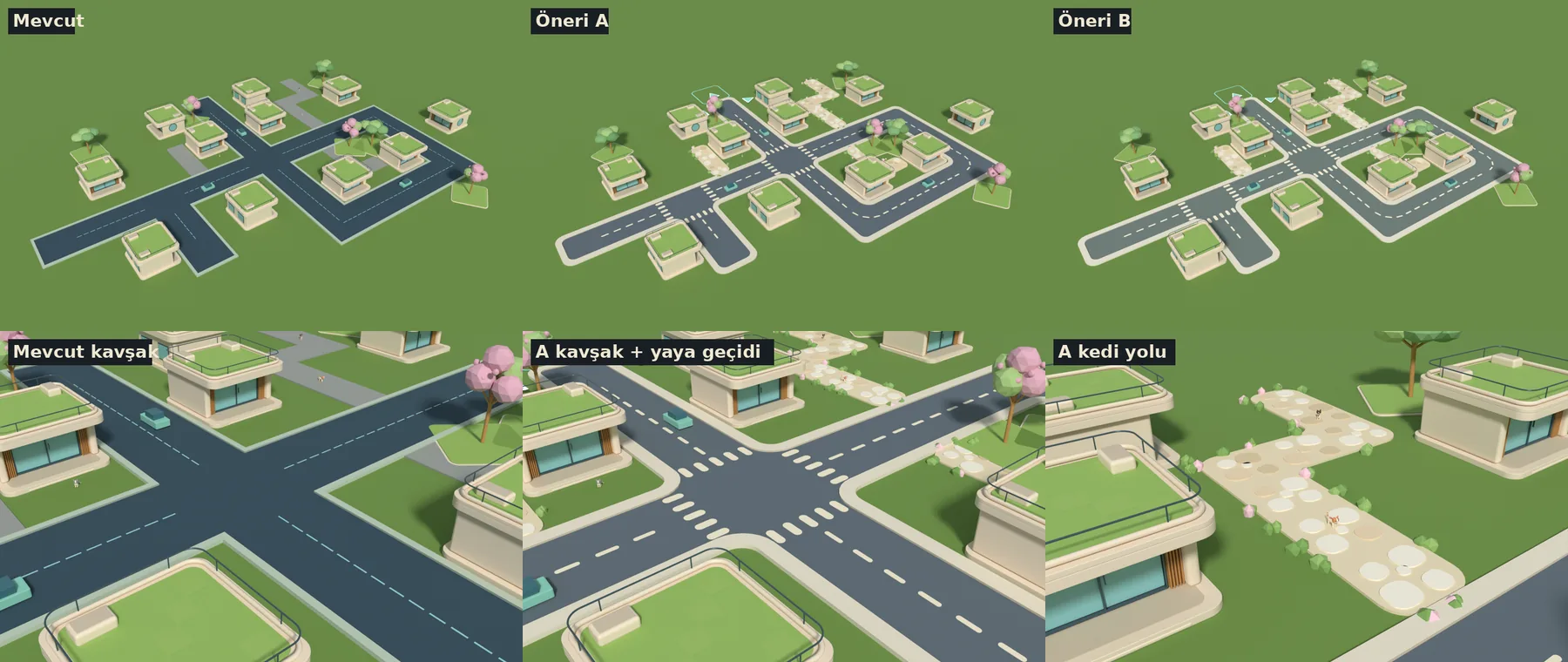
Road style: before and two proposals
Road style · before and after
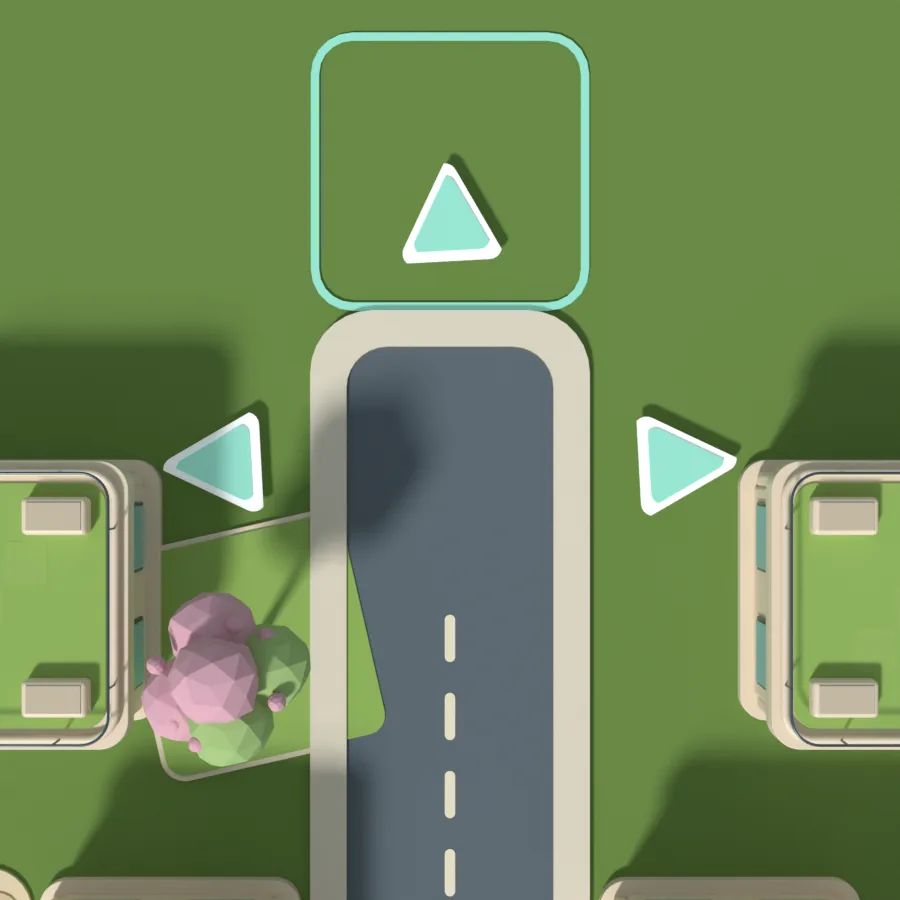
Continuation arrows at a road end
Road-end arrows
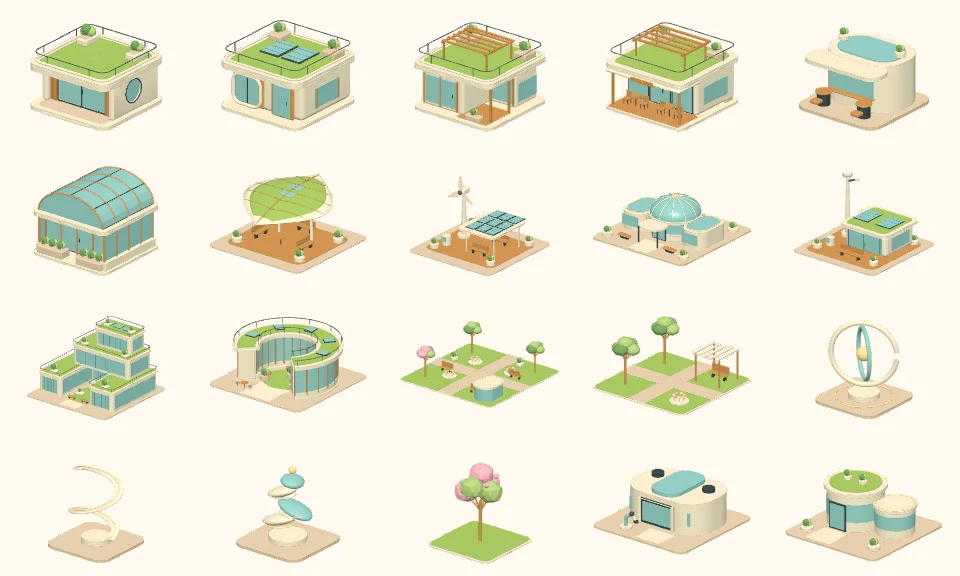
20 buildings from the in-game catalogue
20 buildings from the catalogue

Built to be light

  • A home uses 5 to 10 thousand triangles, a cat about 4 thousand.
  • One material and vertex colours instead of textures: small downloads, fast drawing.
  • Cats are assembled from shared parts: the same draw calls whether a region has one cat or fifty.
  • Residents are a single-mesh, single-material rigged model: one draw call each.

Visual language

Pastel, modern, rounded forms. Ivory bodies, honey-toned wood, opaque turquoise glass, green roof gardens and warm night lights. No grime, no noise, no photorealism; every silhouette reads from the game camera above.

Wish Town is developed by Kivoai Creative with a small team of people and AI collaborators: the studio sets the creative direction and makes the calls; the asset workshop, game development and testing run as separate roles, and every step is recorded in shared documents.

Building with AI

Several models,
one project memory.

How several AI models, guided by a human and sharing one project memory, turned a small idea into a living game.

  1. 01Small and finishable

    Building placement and camera first, then floors, roads, bridges, vehicles and life in the city. Every feature was added on top of the existing experience and tried there.

  2. 02One shared project memory

    Models such as Codex, Claude and GLM helped with coding, bug analysis, optimisation and design. At the centre was not the chat history but the documents in the project folder.

  3. 03Checking as much as generating

    A model saying "done" was never enough: every change went through another review round, tests and a try-out in real, played cities.

  4. 04Decisions stay human

    How the game should feel, the scope and which suggestion to apply are human calls. The models sped things up; the documents kept that speed in order.

Read the full story

Wish Town: making a game together with AI

Wish Town is a city builder I designed not only for building a town but for spending a little time inside the town you build. Listening to residents' wishes, finding them a place and watching the town grow is one part of it. The other part is listening to the music while cats, robot neighbours and residents wander the streets.

My goal was never a big game prepared behind closed doors for years. I wanted to build a small but finishable experience first, then grow it step by step with new animations and mechanics.

From an idea to a working town

We built the game without an off-the-shelf engine, on our own code. Models generated by Blender scripts are exported in a game-ready form and added to that world.

I split development into small steps. First came building placement and camera controls, then the floor system, roads, bridges, moving vehicles and life in the city. Every new feature was tried on top of the existing experience.

That approach shaped design decisions too. Instead of letting buildings scale freely, I chose a system where taller floors unlock as the city grows. It kept the technical complexity in check and let the town rise in a balanced way.

Several models, one shared project memory

In this project I did not use AI as a tool that writes code once, but as development partners I could lean on for different tasks. I worked with models such as Codex, Claude and GLM on coding, bug analysis, optimisation and design. Product direction, priorities and final decisions stayed with me.

The real challenge was not running models at the same time but making sure each could understand what the others had done. Each chat has its own memory; the project is one. So I put the documentation in the project folder, not the conversation history, at the centre of the process.

Markdown documents recorded the architecture, design decisions, task boundaries, test results and open issues. Document indexes showed where each piece of information lived, and short project memory notes let a new session catch up on the current state.

That way one model could review work another had left behind without me retelling the whole conversation. The result was a way of working built not on models constantly talking to each other, but on a shared, traceable record.

Checking matters as much as generating

I never accepted a model saying "done" as enough on its own. Passing changes through another review round, testing them and seeing them in the game became a core part of the process.

Performance work showed why. An optimisation can lower the processing load while breaking selection outlines, moving objects or fallback rendering. So we looked not only at FPS but at whether the behaviour players see stayed intact.

I used my own cities as test data. I reported visual problems with screenshots, videos and saved cities, so reviews happened not only on small, controlled examples but on towns that grew out of real play.

I steer, the contributions come from many places

In this way of working my role was not just writing prompts. Deciding how the game should feel, limiting scope, trying the results and choosing which suggestion to apply were at the centre of the process.

AI models sped development up; documentation helped keep that speed from turning into chaos. Keeping local development, pushing to GitHub and going live as separate stages also let me manage changes with more control.

Closing

For me, Wish Town is both a game and an experiment in a way of making things: bringing together the contributions of different models around human direction and a shared project memory, to turn a small idea into a living experience.

Let's say it plainly

Did we use AI? Yes, openly. Who made the decisions? A designer, who chose what to make and tried every piece in play.

We composed the music in code and synthesised it from scratch; no stock sounds and no AI music model. The radio voices are AI voices from text-to-speech models; nobody's voice was cloned. Every 3D model is a Blender script; no mesh was generated by AI.

AI drafts the text and a designer approves it; the game is translated into nine languages with AI. AI assistants write the code; there is no off-the-shelf engine, and the designer chooses the features. Nothing is generated while you play, and there are no model calls over the network.
Our dream

A town where people and nature
are at ease.

Wish Town dreams of a hopeful town: walkable streets, shared spaces and local making. Streets put people, cats and robot neighbours first; neighbourhoods produce their own energy, water and food with machines. Not cold megastructures, but a human-scale life growing among the trees.

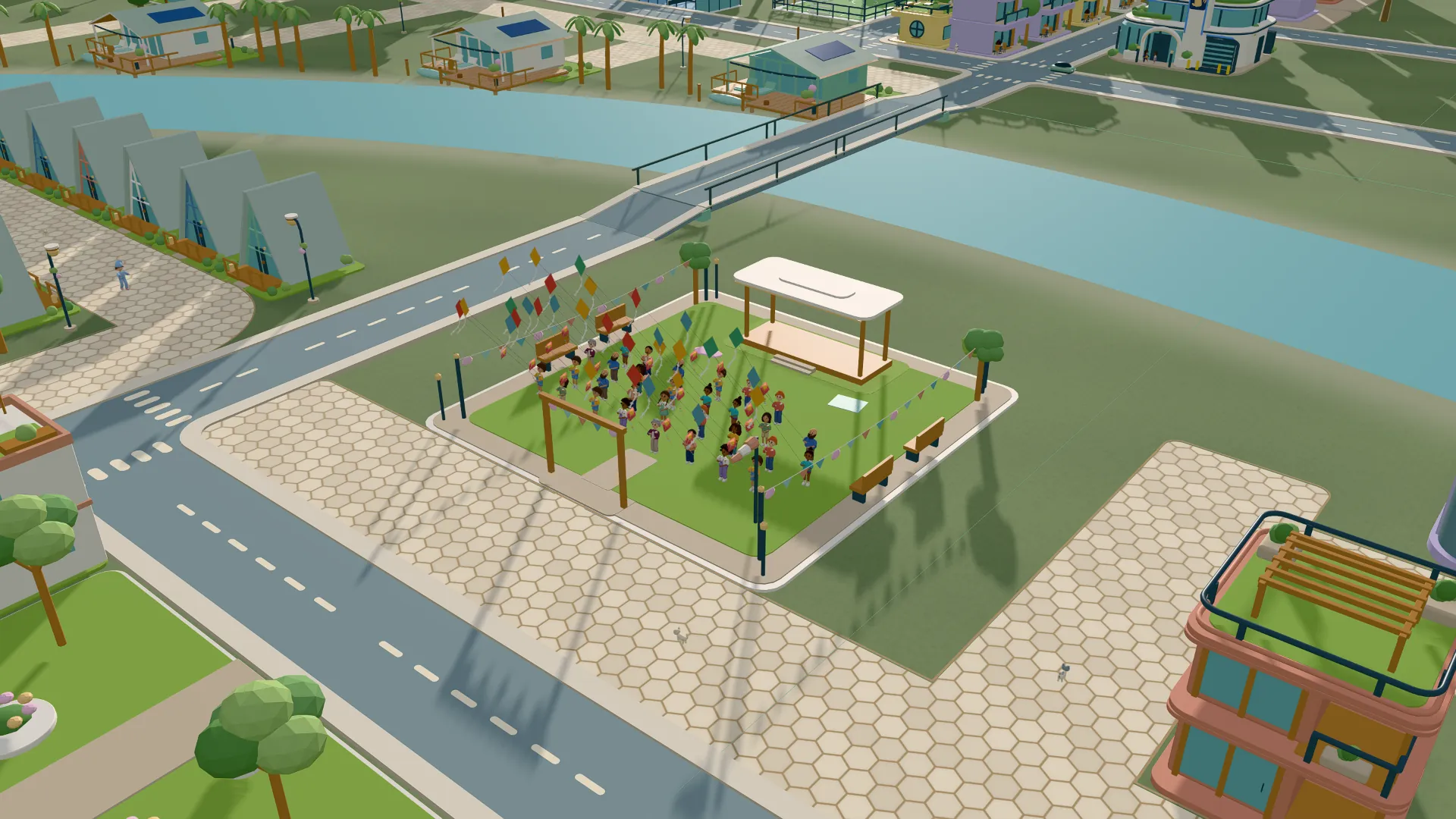
In game: residents gathered with kites in a riverside park, early evening

Where we are heading

  • Every home brings a life

    Each home you place brings a resident: reading on the veranda, yoga on the terrace, swinging in a hammock. As your town grows it feels livelier, not busier.

  • Streets belong to the living

    Cats, robot neighbours and residents fill them; vehicles glide quietly past.

  • Self-sufficient neighbourhoods

    Solar panels, wind turbines, greenhouses and roof gardens are not decoration; machines meet the neighbourhood's needs.

  • A town that grows through wishes

    The town grows not from a master plan but from its residents' wishes; council terms set the rhythm.

  • Easy for everyone

    No rush, no penalties, no losing; a town you can enjoy even on a tired evening.

  • A game that keeps growing

    The town keeps growing with new wishes.

Building a little world should be easy. And it should be a place you'd love to live in.

Your town is waiting.

Wish Town is coming to Steam. News and images at playwishtown.com.

playwishtown.com ↗ Coming to Steam