
A Kivoai Creative game

Building a little world? Easy peasy.

It's Your Town is a calm browser city builder where you shape a human-scale, nature-filled little town.

  • Free
  • No install
  • In your browser
  • WebGPU · WebGL 2
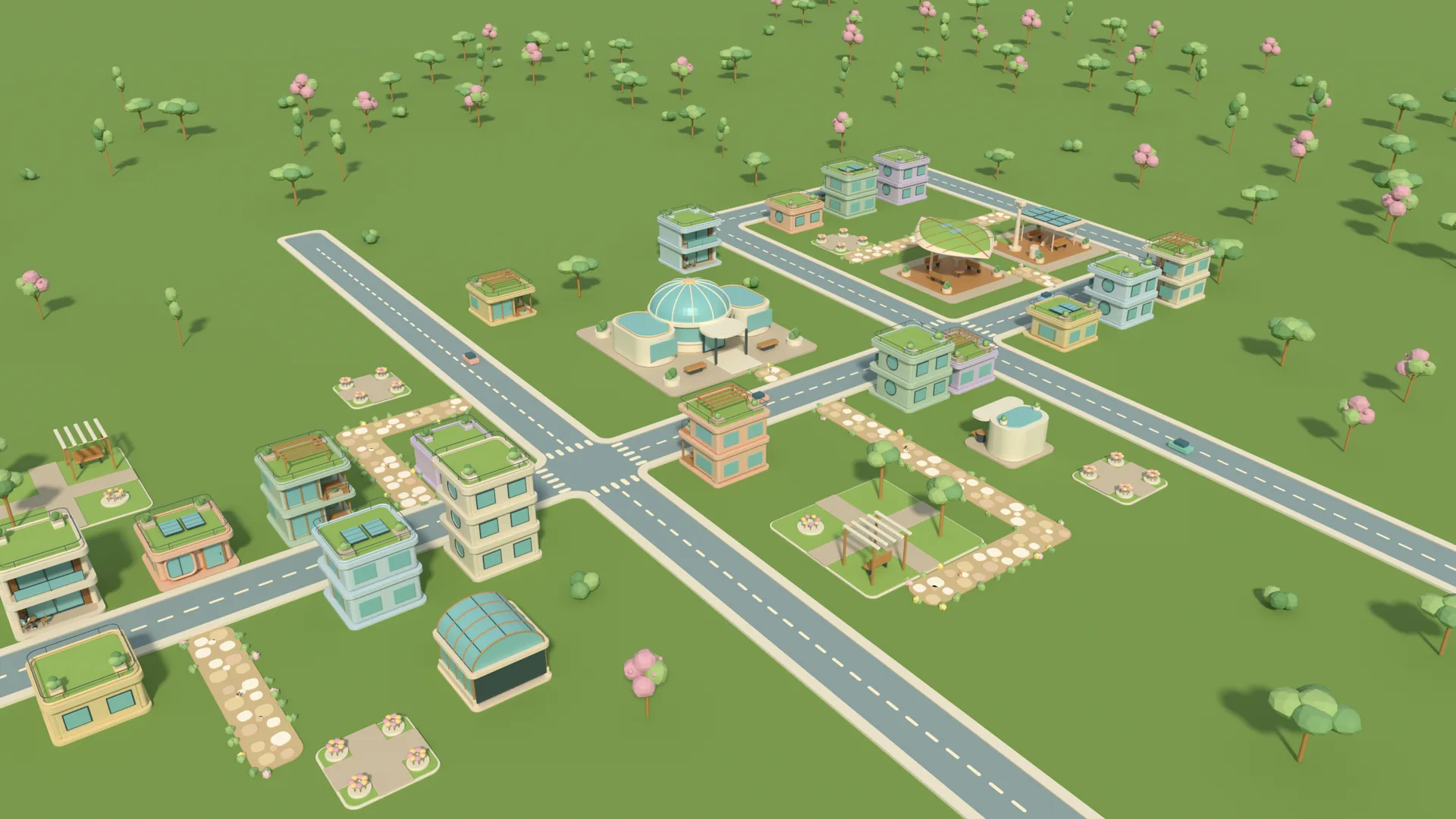
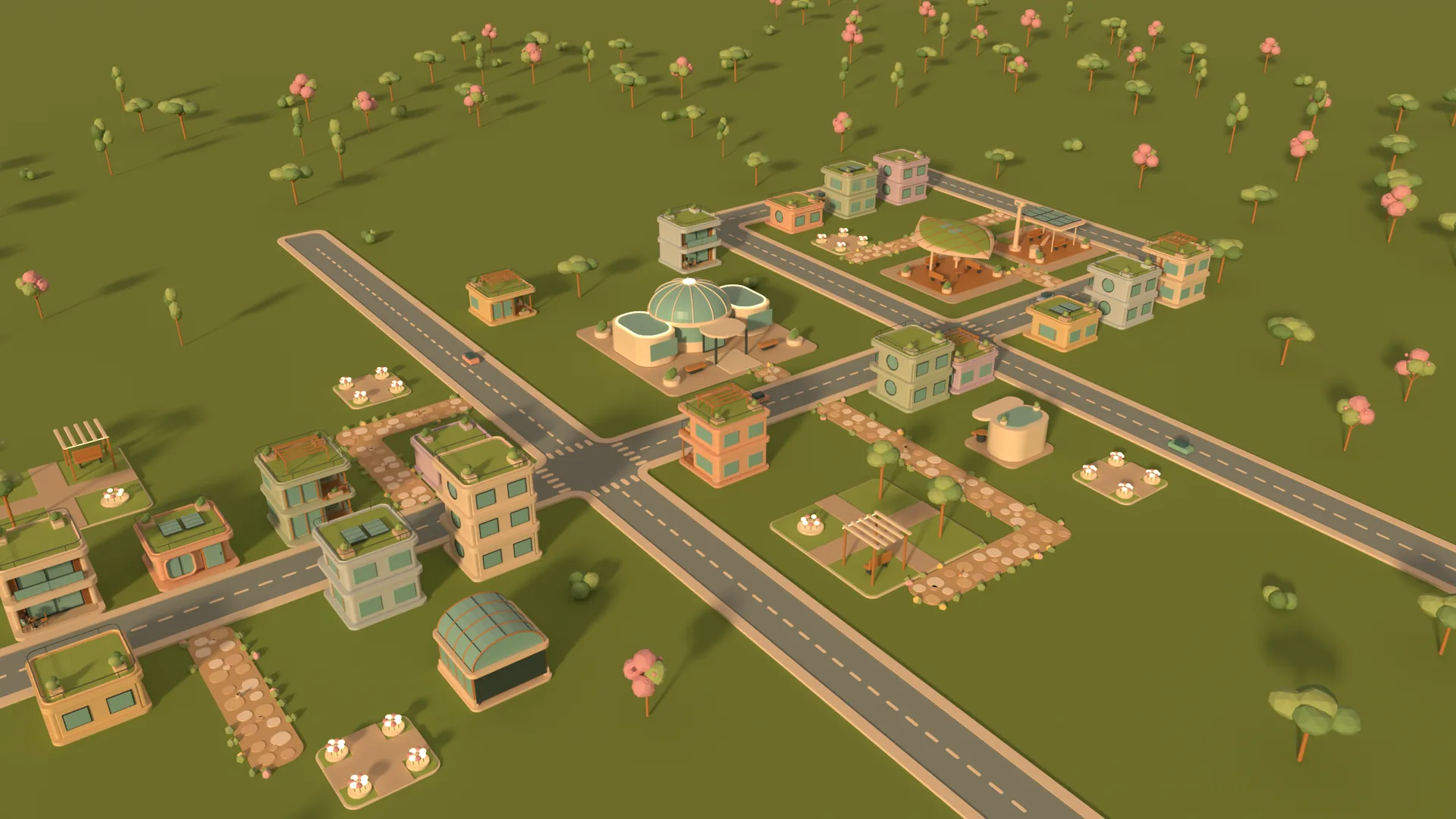
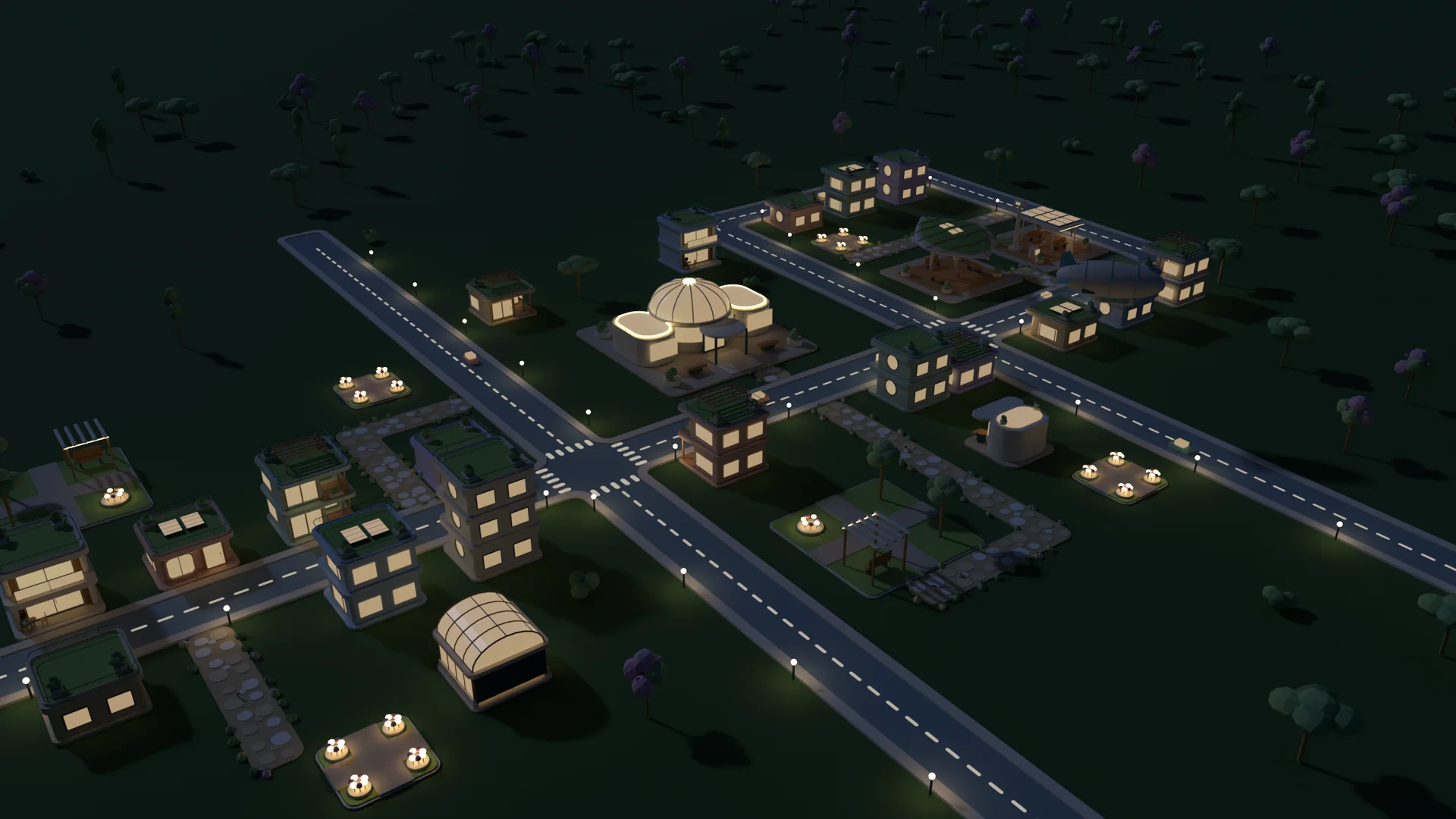
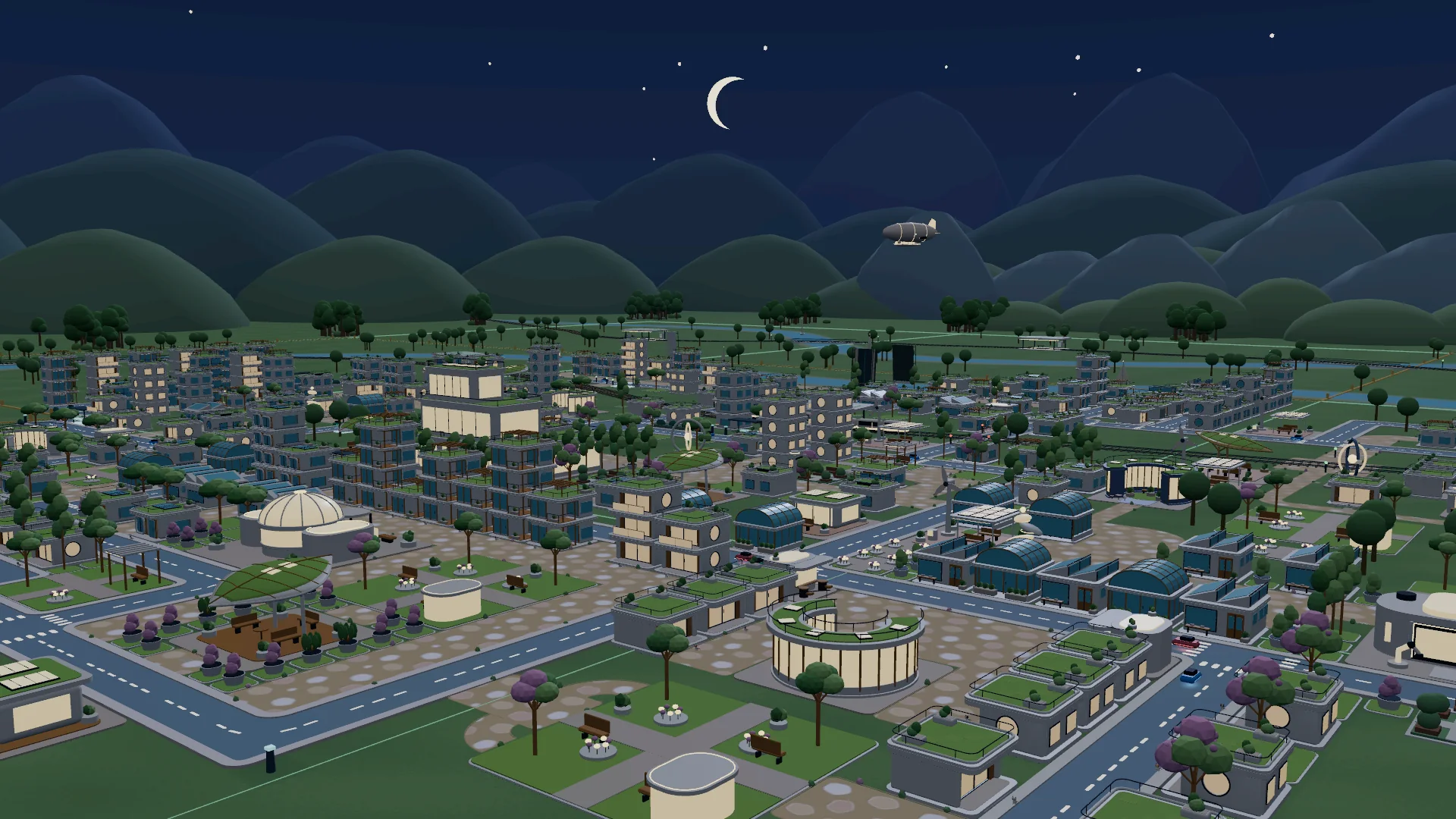
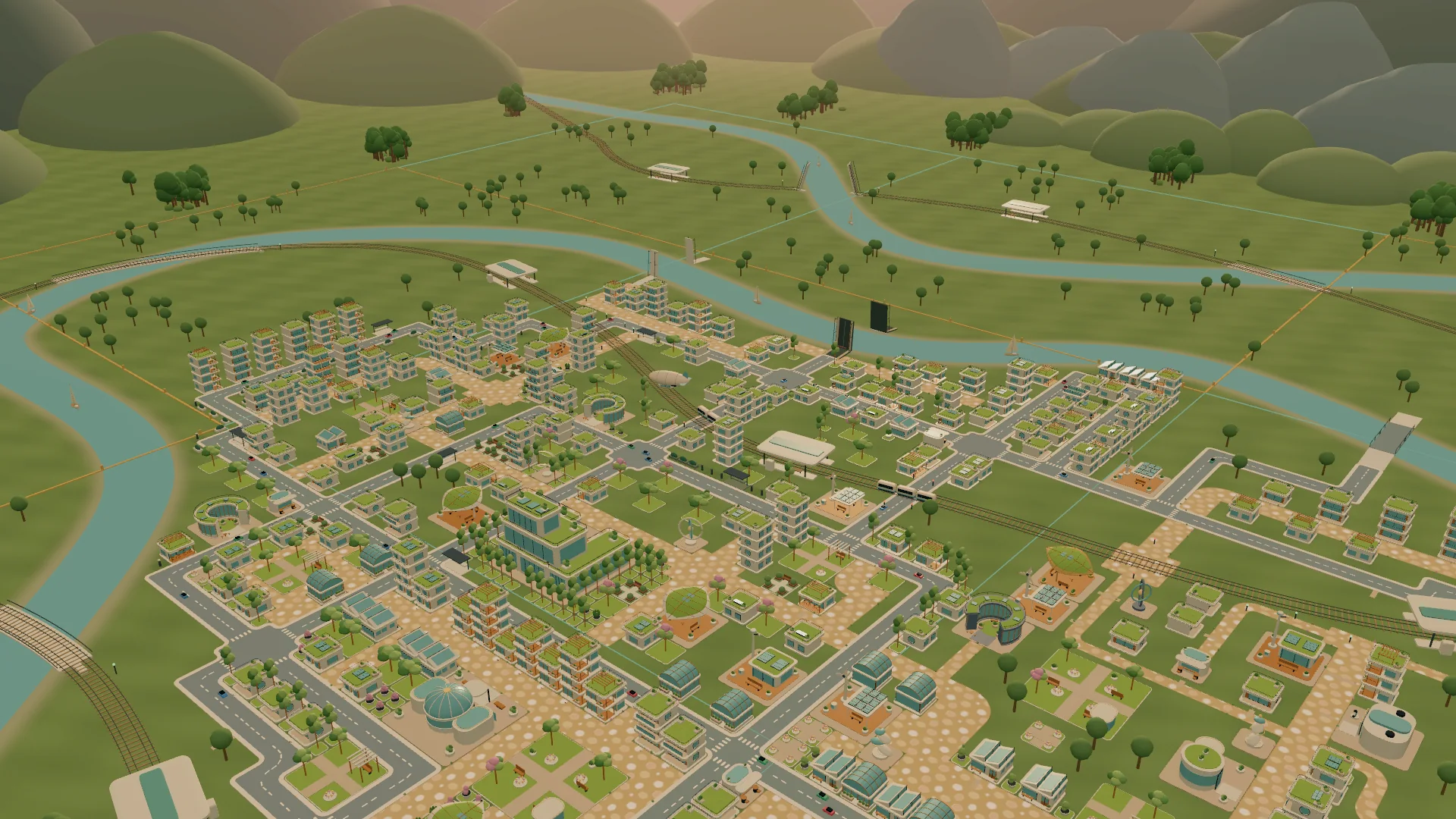
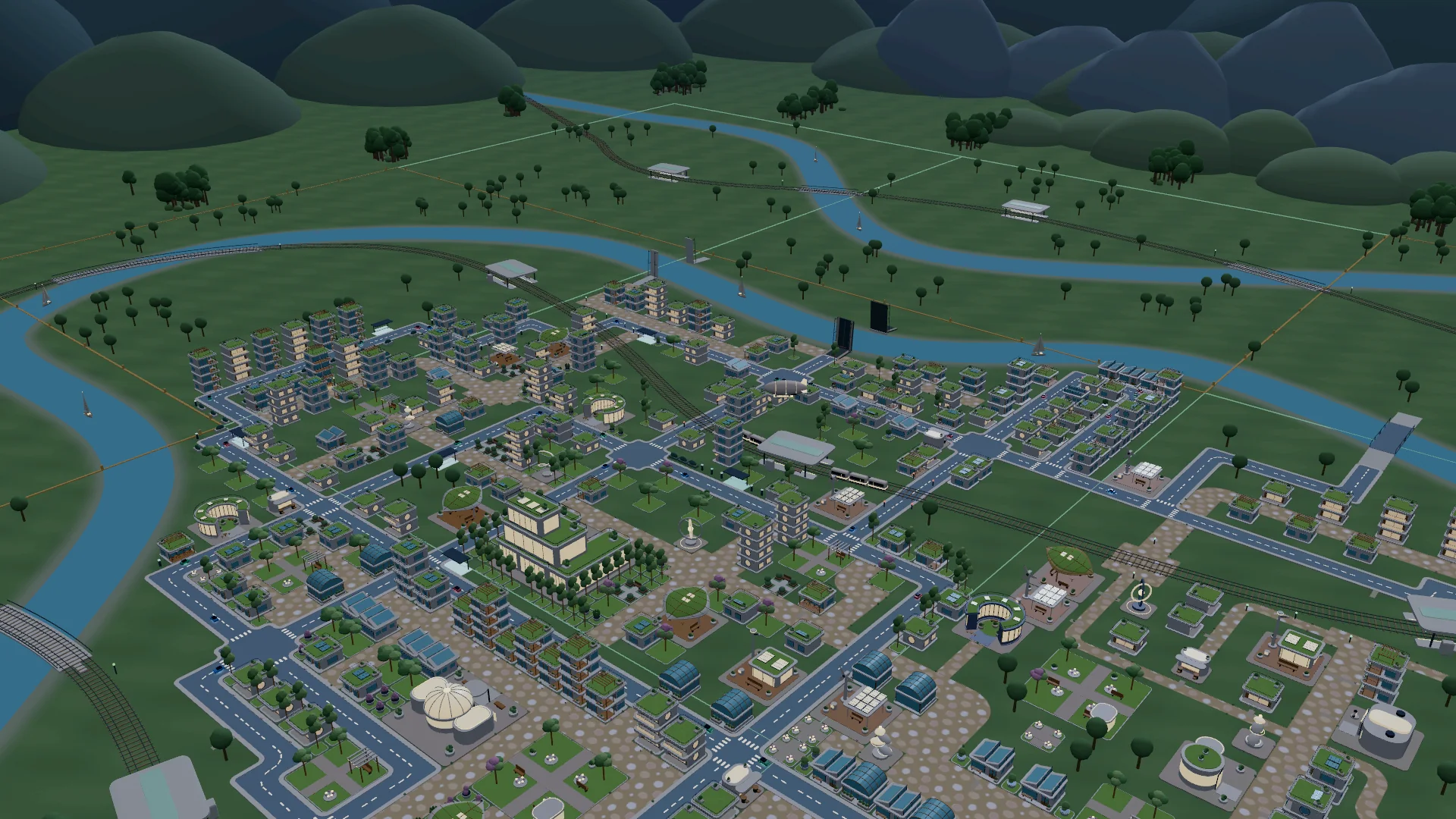
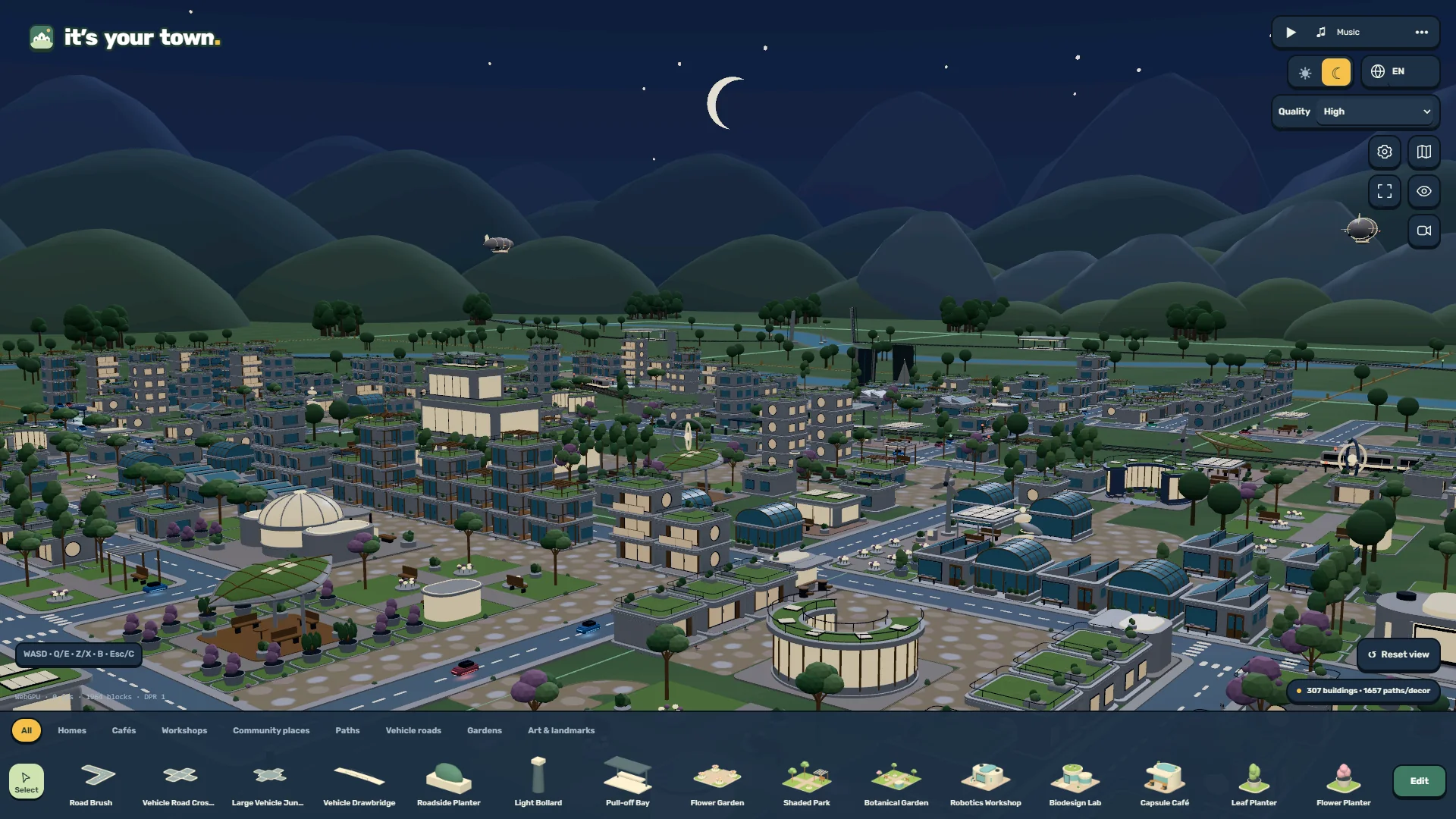
A pastel neighbourhood with roads, homes, a science centre and parks, daytime The same neighbourhood at golden hour The same neighbourhood at night: lit windows, street lamps, an airship

The game

No score, no timer,
no losing.

Build your own neighbourhood with homes, gardens, footpaths and trains. Cats wander the streets, boats drift down the river and windows glow at dusk. Just you and your city. Nothing to install, and your town saves itself in your browser.

  1. 01A nine-region world

    A valley split by a river and a railway; your city starts in the centre and grows as you open neighbouring regions.

  2. 02Walkable streets

    Footpaths, promenades, crossings at every junction and stepping-stone cat paths.

  3. 03A living city

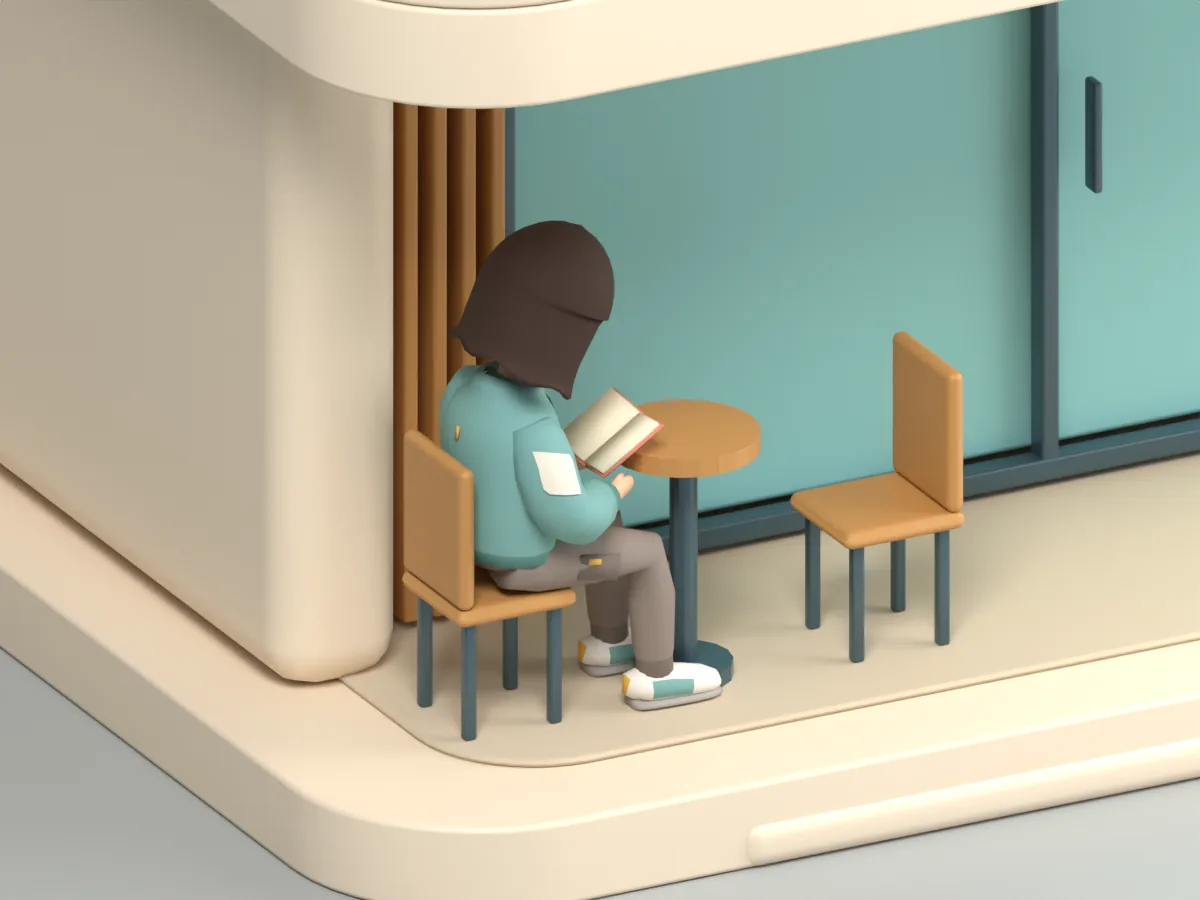
    Every home brings cats that explore the streets; residents read on their verandas.

  4. 04Gentle transit

    Trains, river boats, drawbridges, airships and hover vehicles on their own road network.

  5. 05Effortless roads

    Paint a road with the brush; bends, junctions and lane markings appear on their own.

  6. 06Day and night

    Switch the light, hide the interface, or take a City Tour through the eyes of a cat, a boat or an airship.

Runs on WebGPU in current browsers and falls back to WebGL 2 automatically. It opens on phones; desktop is the most comfortable.

In game · itsyourtown.com

Same camera,
day and night.

Screenshots from the live game. Drag the line and let the moon take the sun's place.

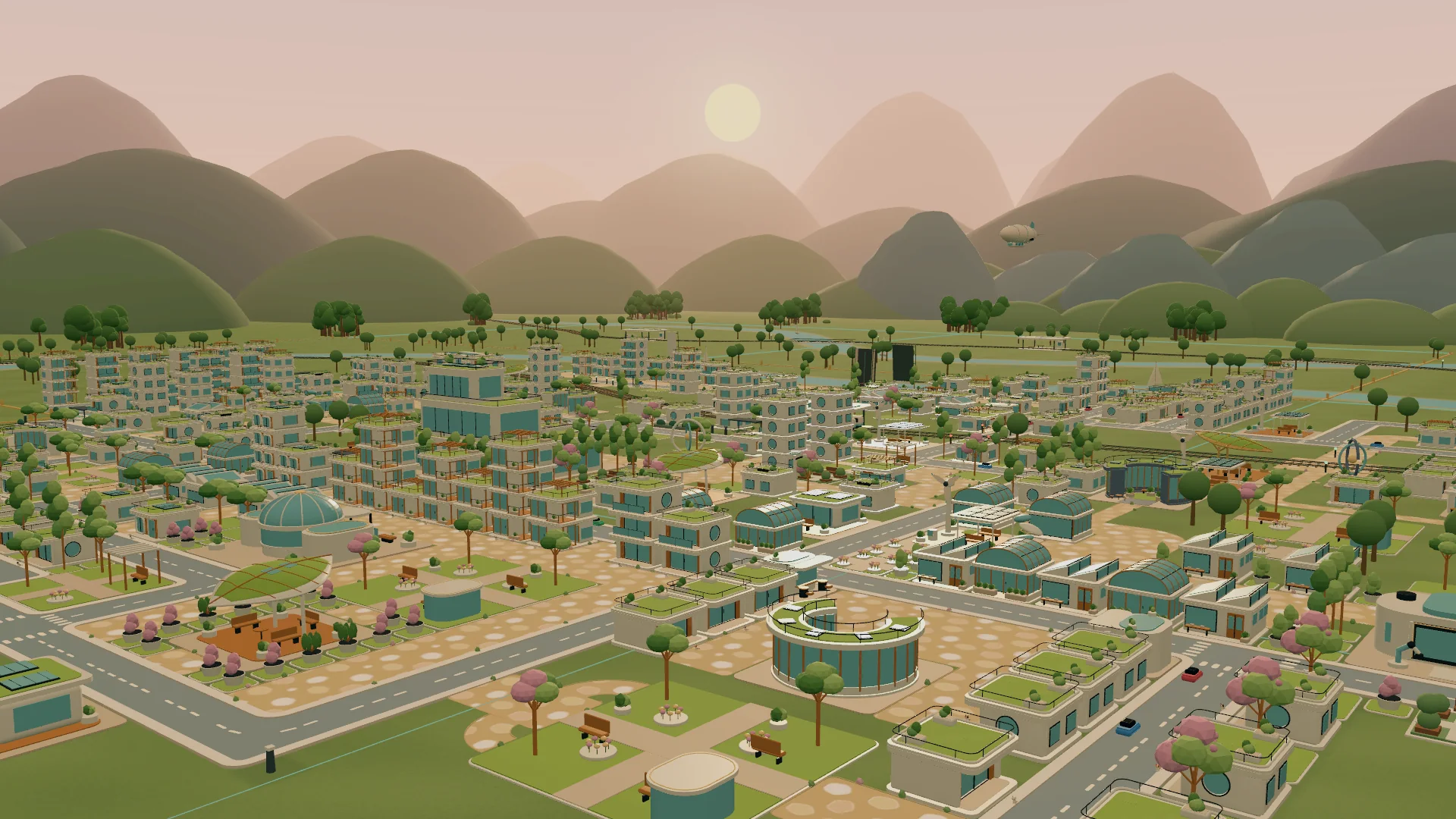
In game: the town skyline against the mountains, by day In game: the same camera at night; the moon in the sun's place, an airship on the horizon
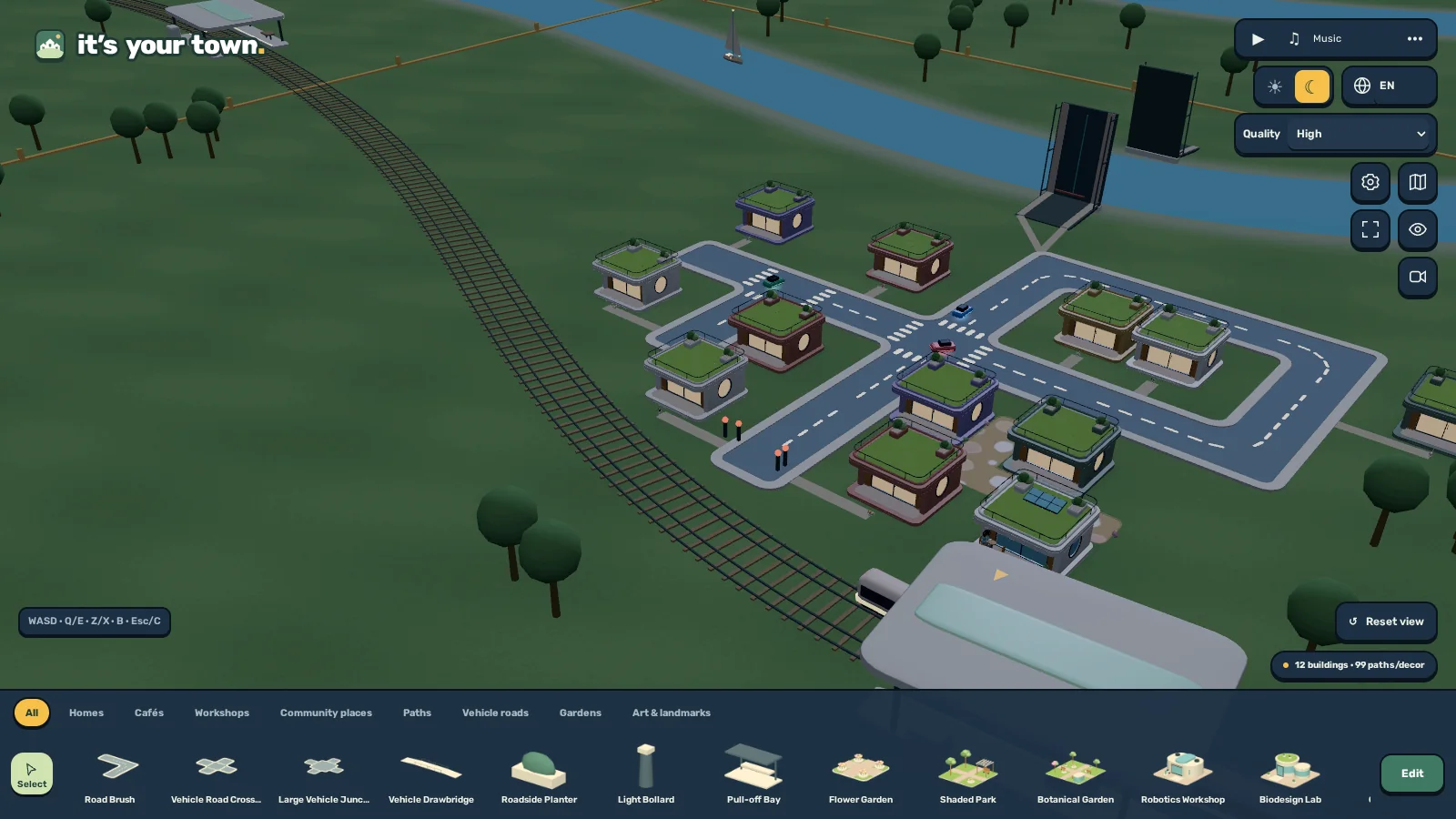
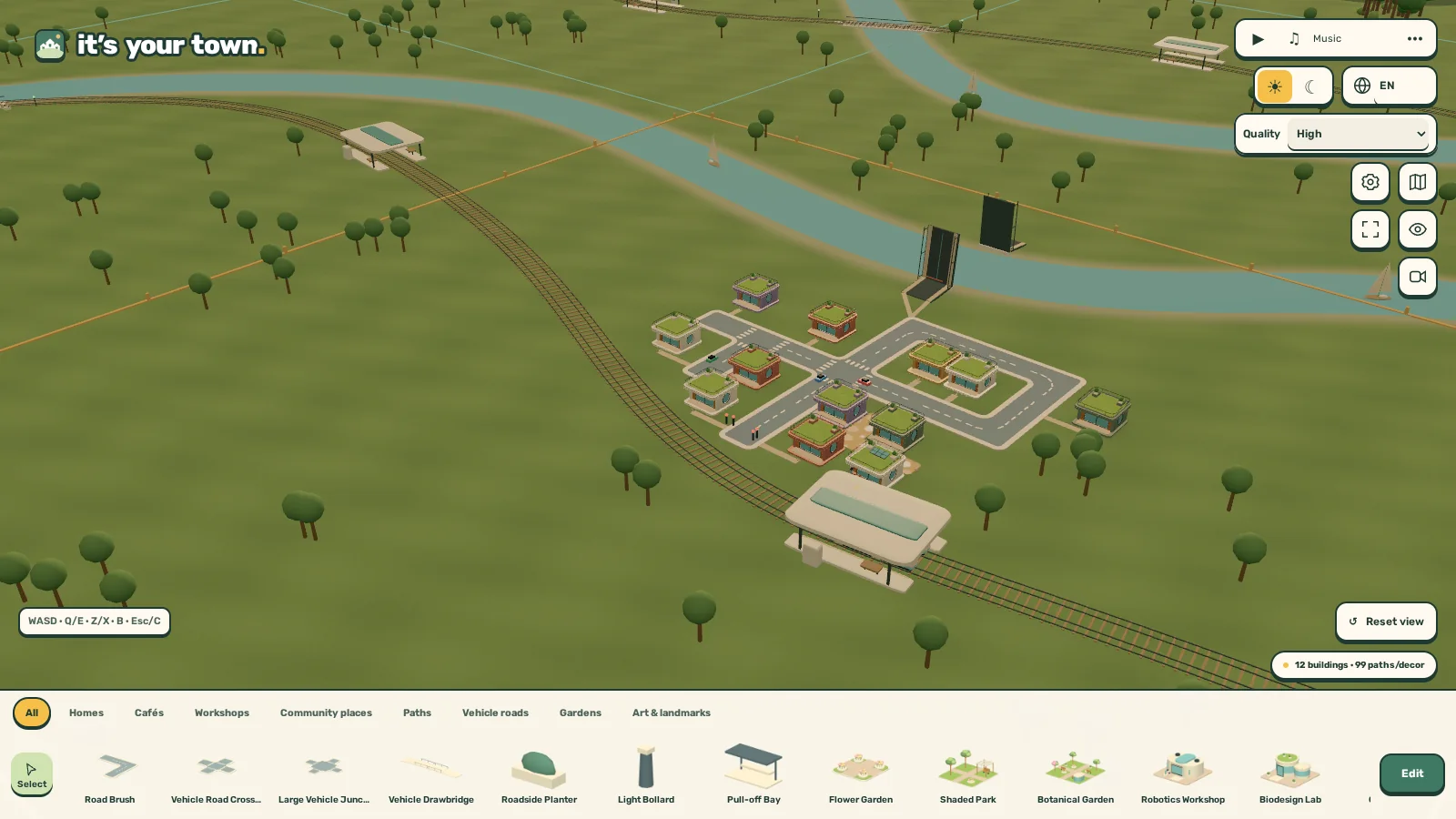
In game, overview: town, river, railway and a train, by day In game, overview: the same town at night
Overview: river, railway and a train
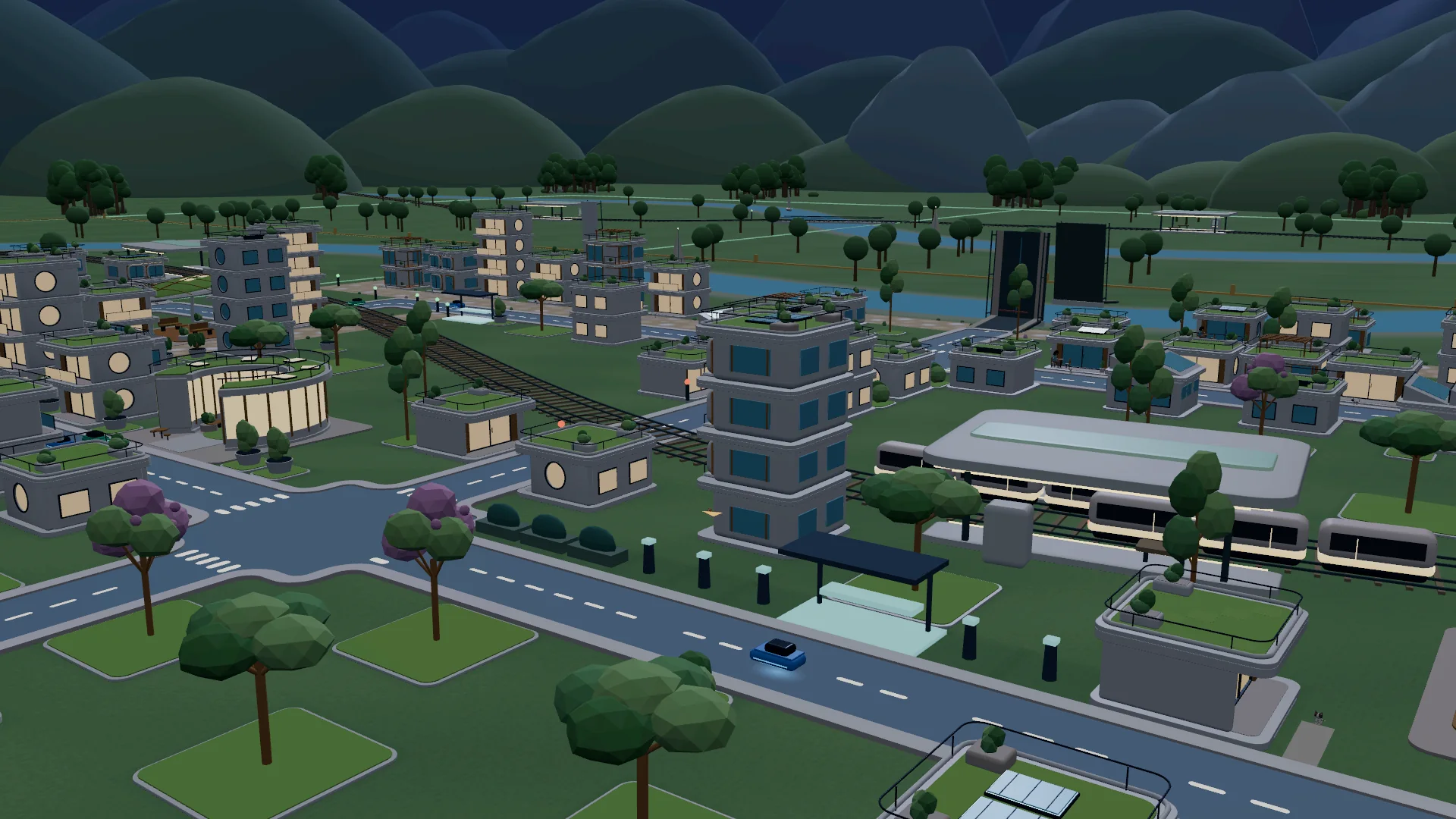
In game: a train at the station at night
Station at night
Night view with the game interface
With the game interface
In game: the same neighbourhood at night
Neighbourhood at night
In game: wide view with river, railway and drawbridge
Wide view: river, railway and drawbridge

Residents

A story
from every home.

Reading on the veranda, yoga on the roof, guitar in the park. The residents of It's Your Town came from different places and found the same neighbourhood.

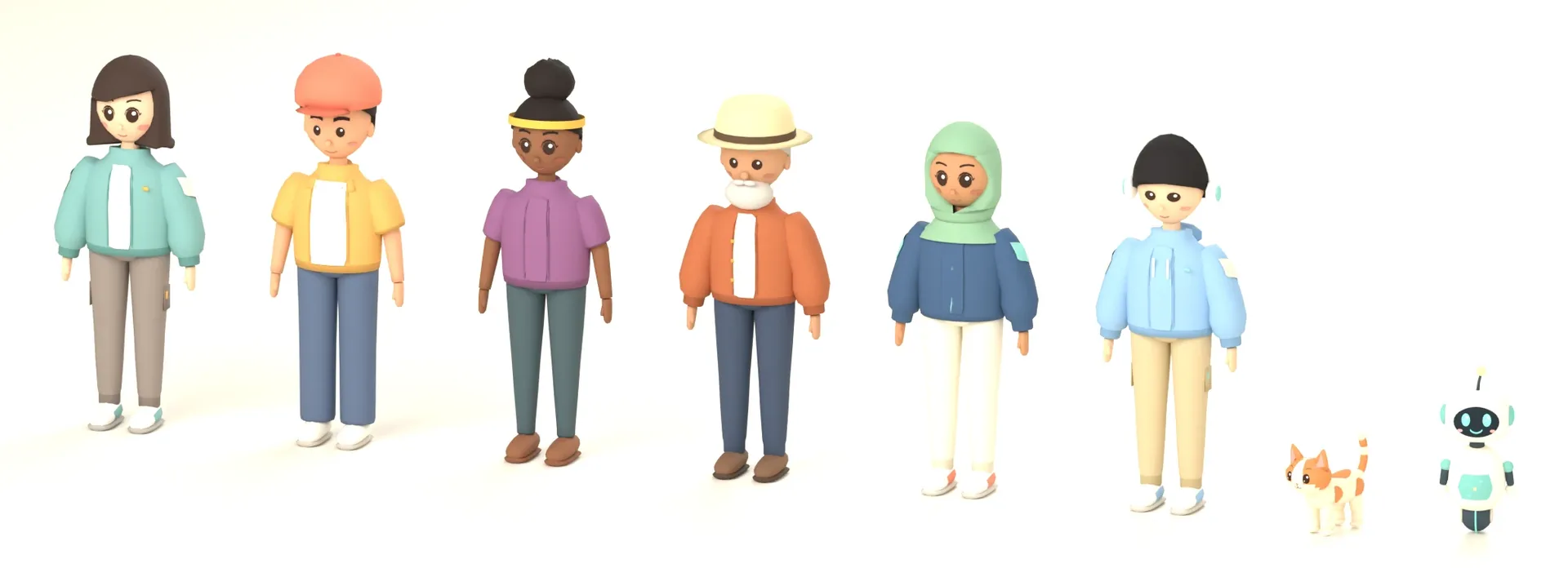
The residents side by side: six people of different ages and cultures, a cat and a robot

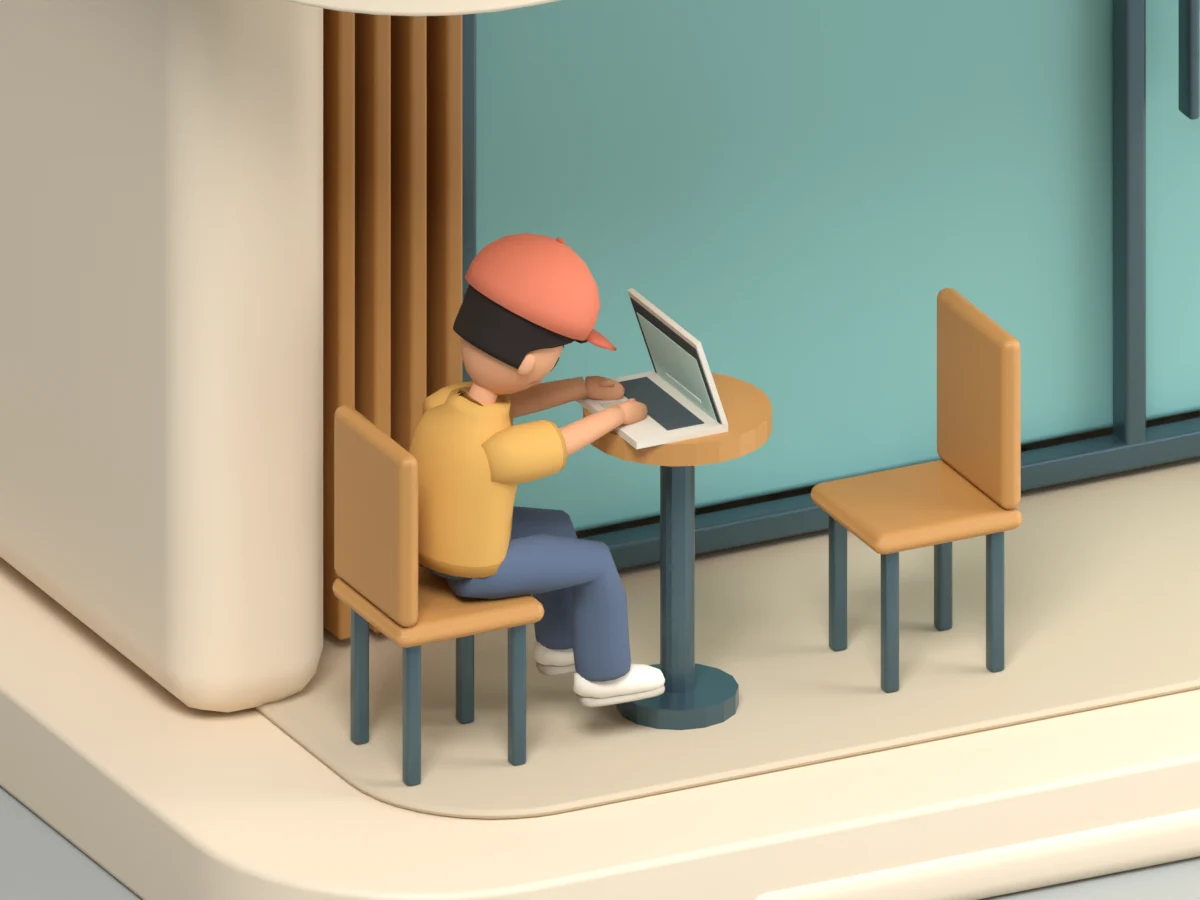
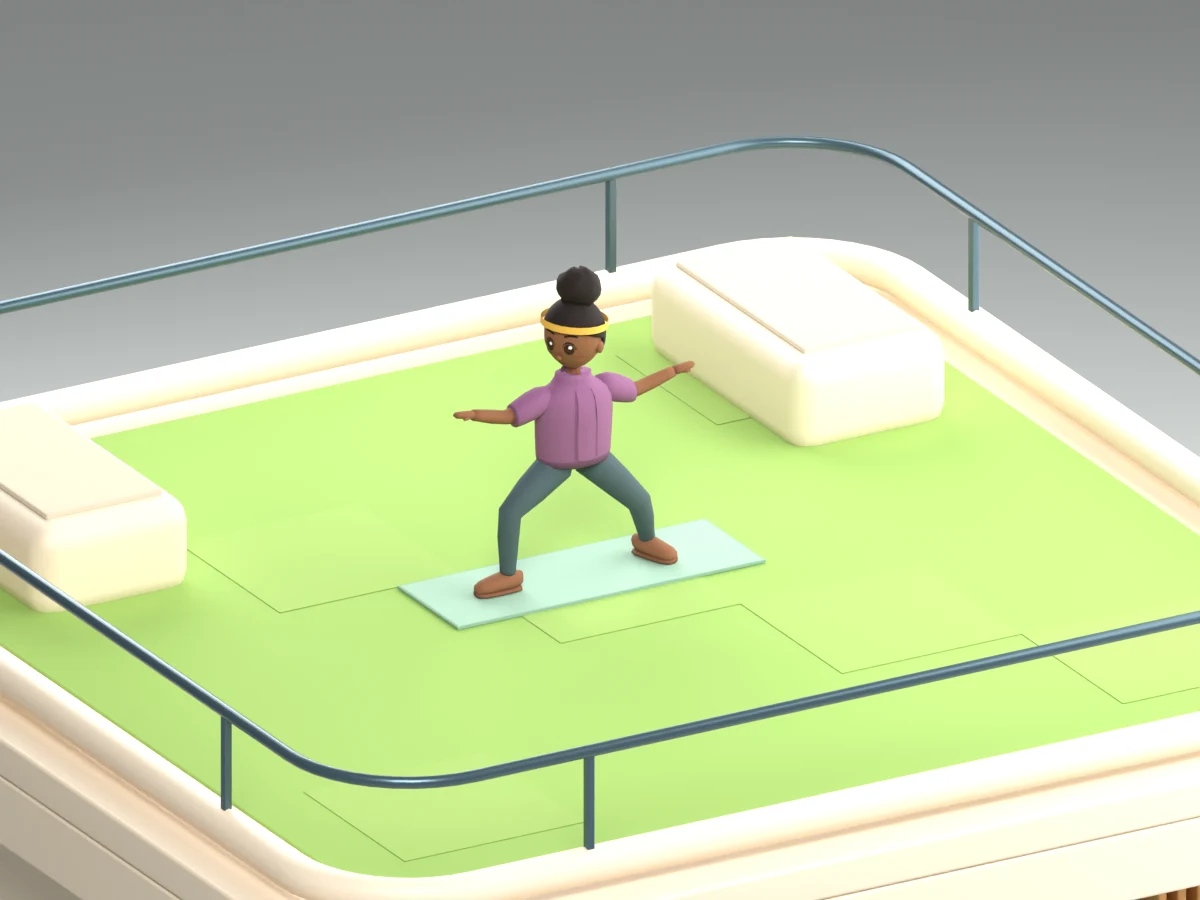
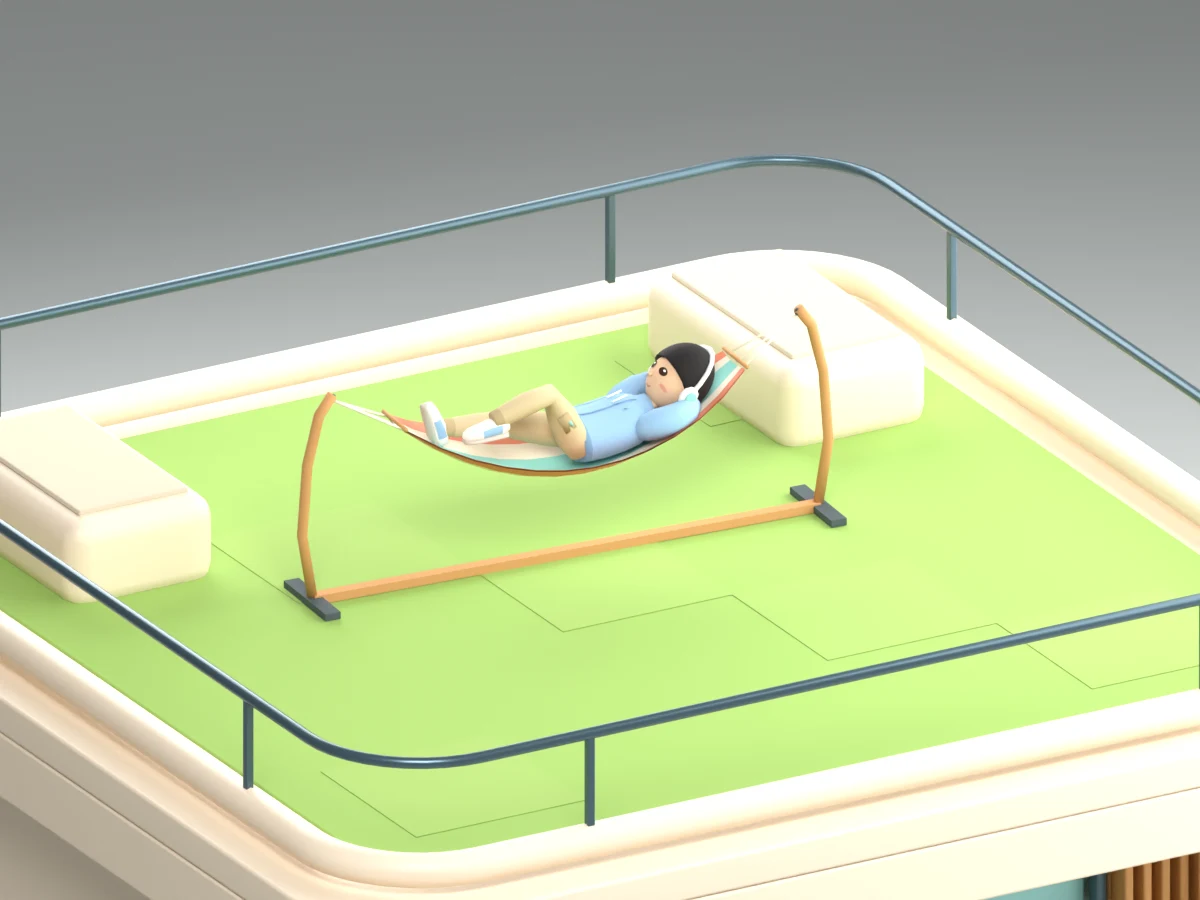
In It's Your Town every home brings a resident, and every resident is lost in their own little routine. One reads on the veranda, another works on a laptop at the table. Someone flows through yoga on the roof terrace, someone else drifts in a hammock with headphones on, swaying gently.

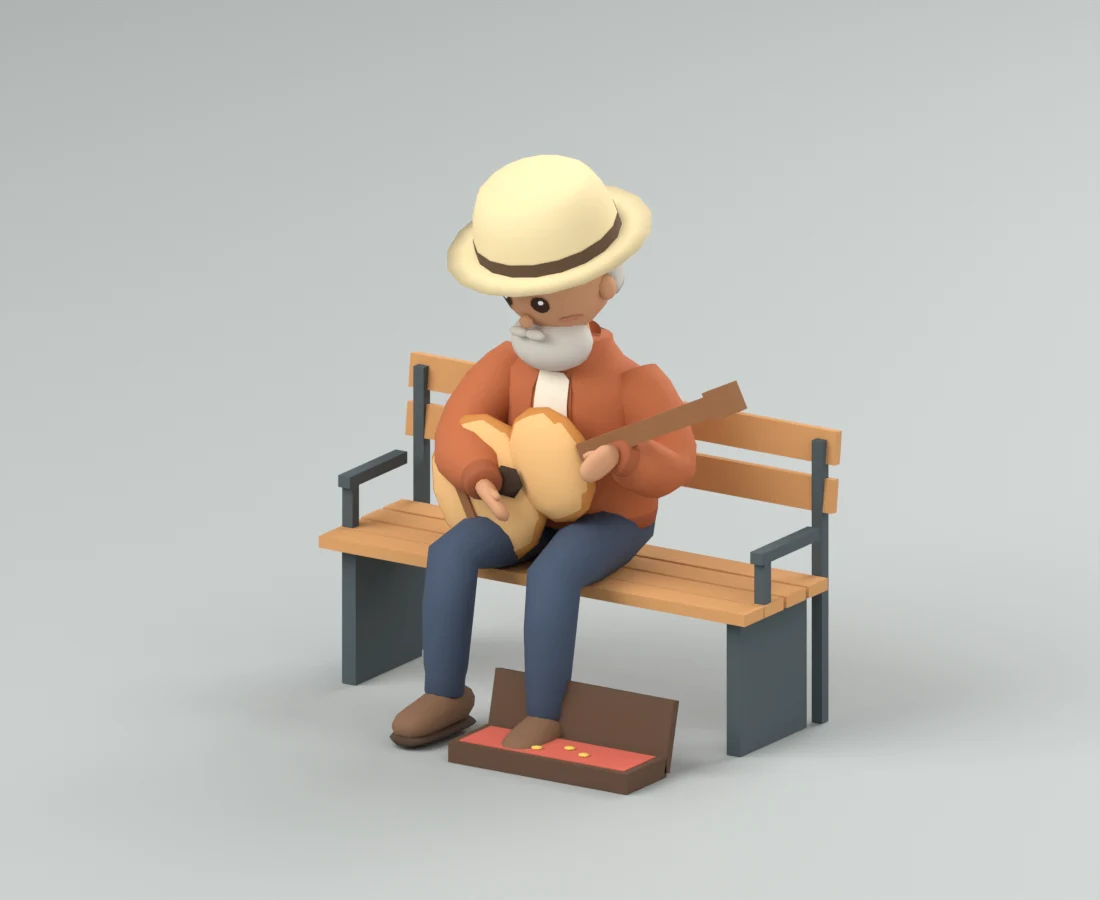
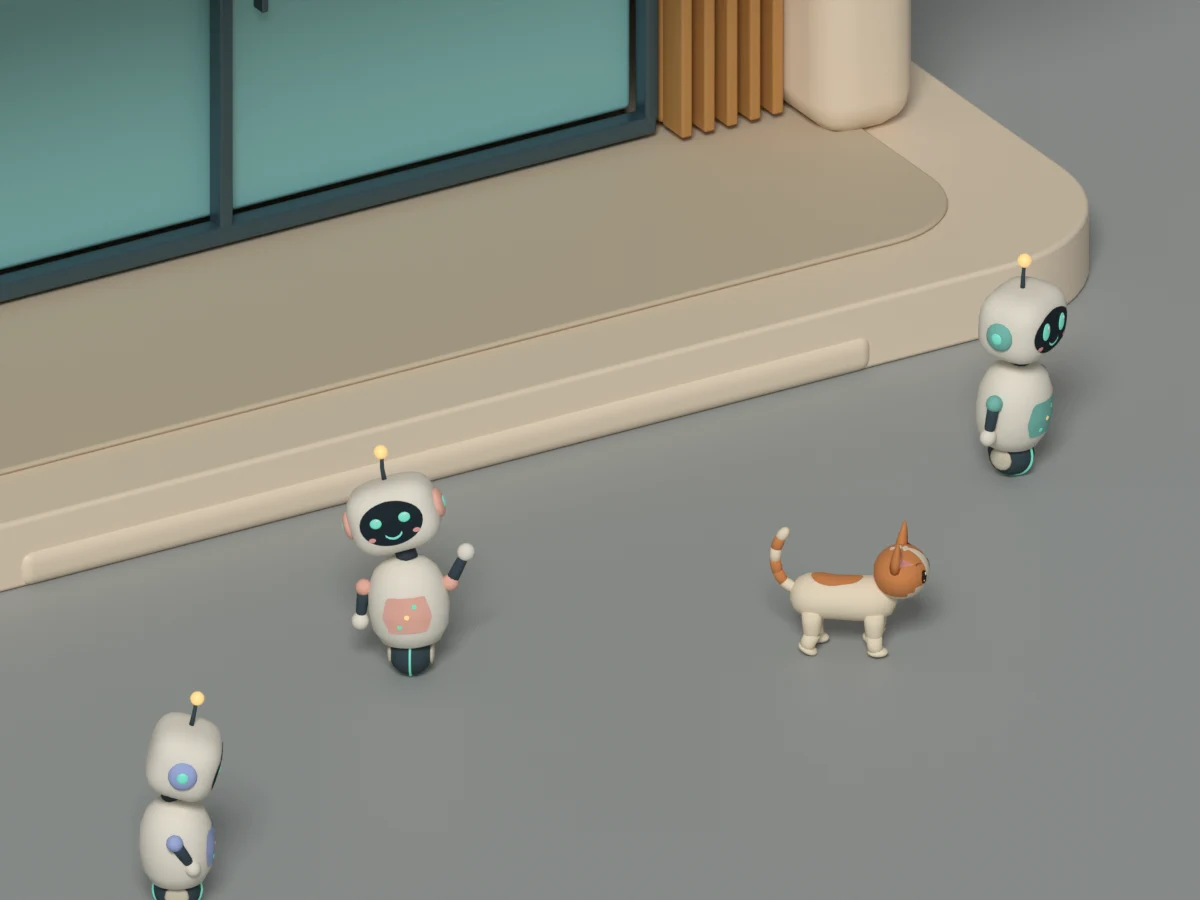
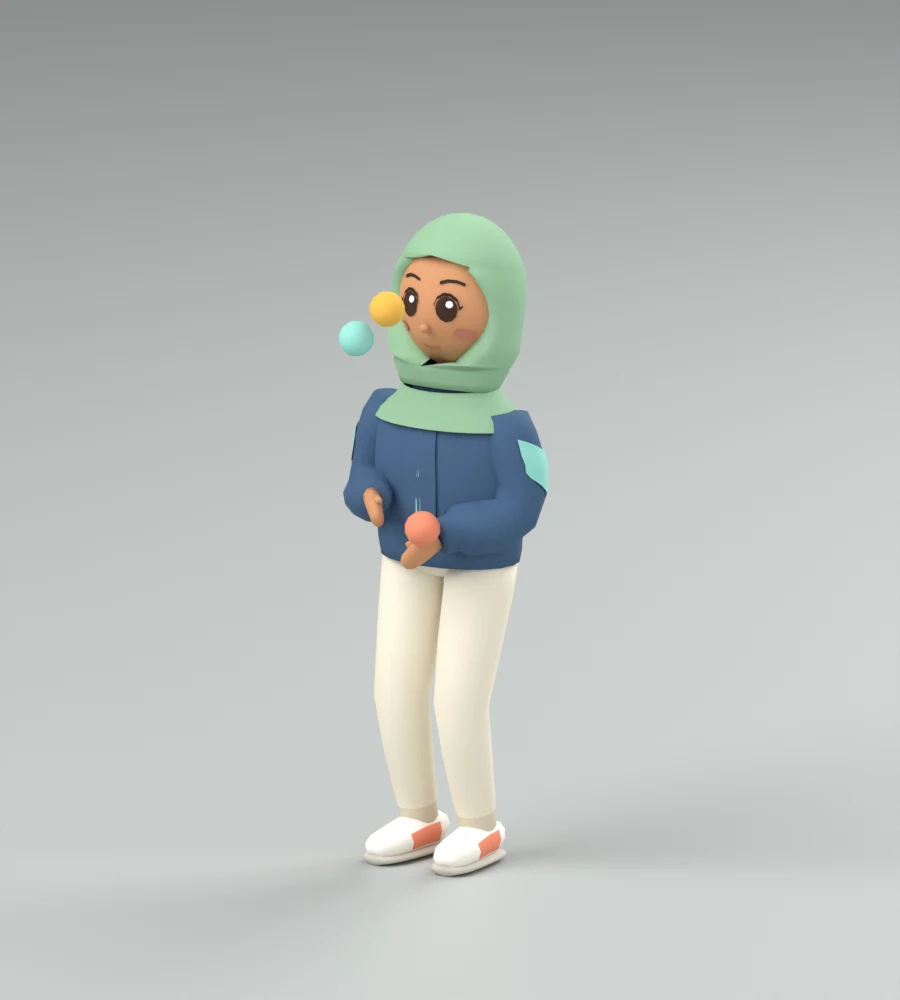
The streets are never empty either. On a park bench a grey-bearded gentleman strums his guitar, a few coins in the open case at his feet. In the square a young woman in a headscarf keeps three bright balls in the air. In between, cats wander out of their homes and little one-wheeled robots with screen faces roll around the neighbourhood.

Our residents come from different cultures, ages and walks of life and have found their way to the same neighbourhood. We tell that story through skin tones, hair textures, faces, ages and everyday habits rather than costumes. They all belong to one friendly design family: soft rounded shapes, pastel colours and a shared scale that fits every corner of the town.

Under the hood each resident is a single mesh with a single material on a shared skeleton, which makes new activities easy to add and keeps even a busy town running smoothly.

Resident in a cap working on a laptop at the veranda table
Laptop on the veranda
A grey-bearded gentleman playing guitar on a park bench, open case at his feet
Guitar in the park
A resident doing yoga on the roof terrace
Yoga on the roof
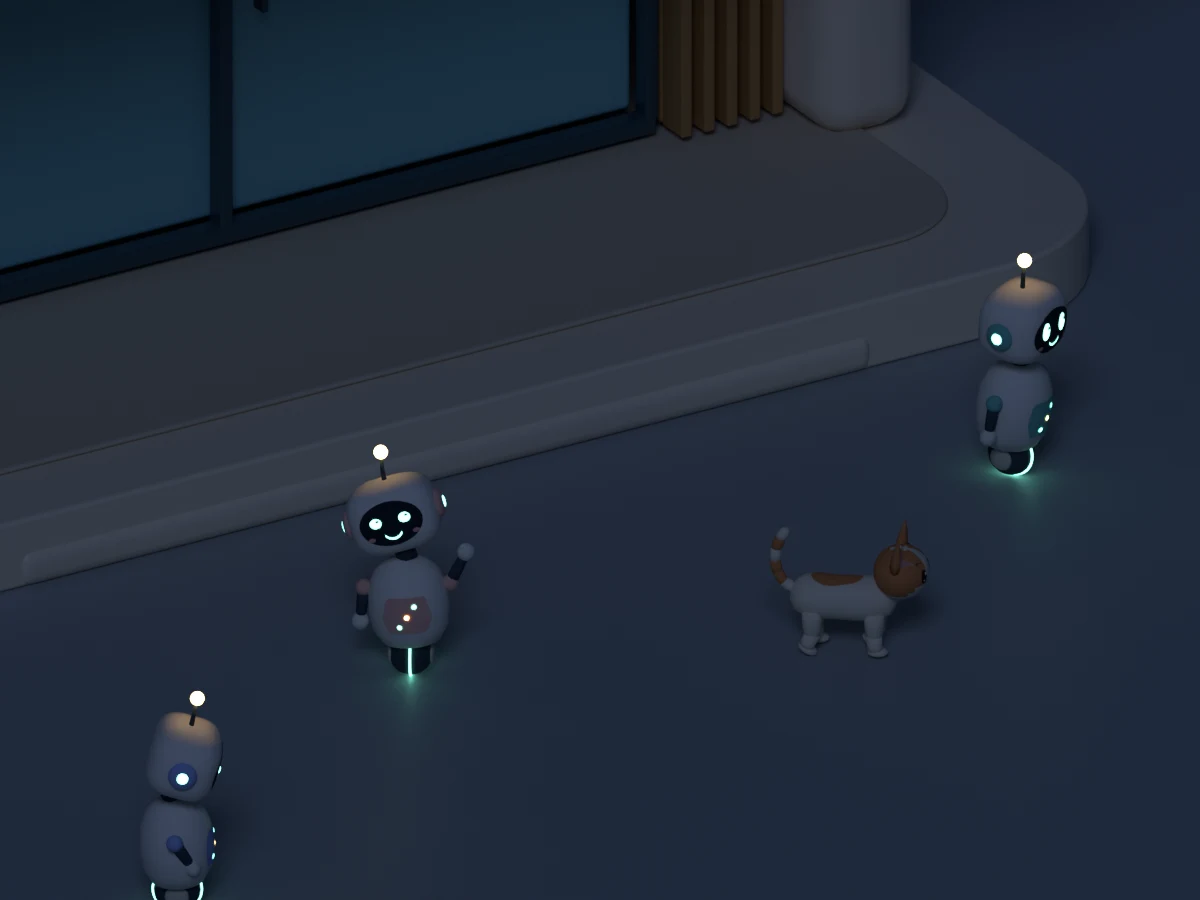
Robots in different colours and a cat on the street, by day
Neighbourhood robots
A young woman in a headscarf juggling three balls
Juggler
A young resident with headphones swaying in a hammock on the roof terrace
In the hammock
Resident reading on a home's veranda
Reading on the veranda
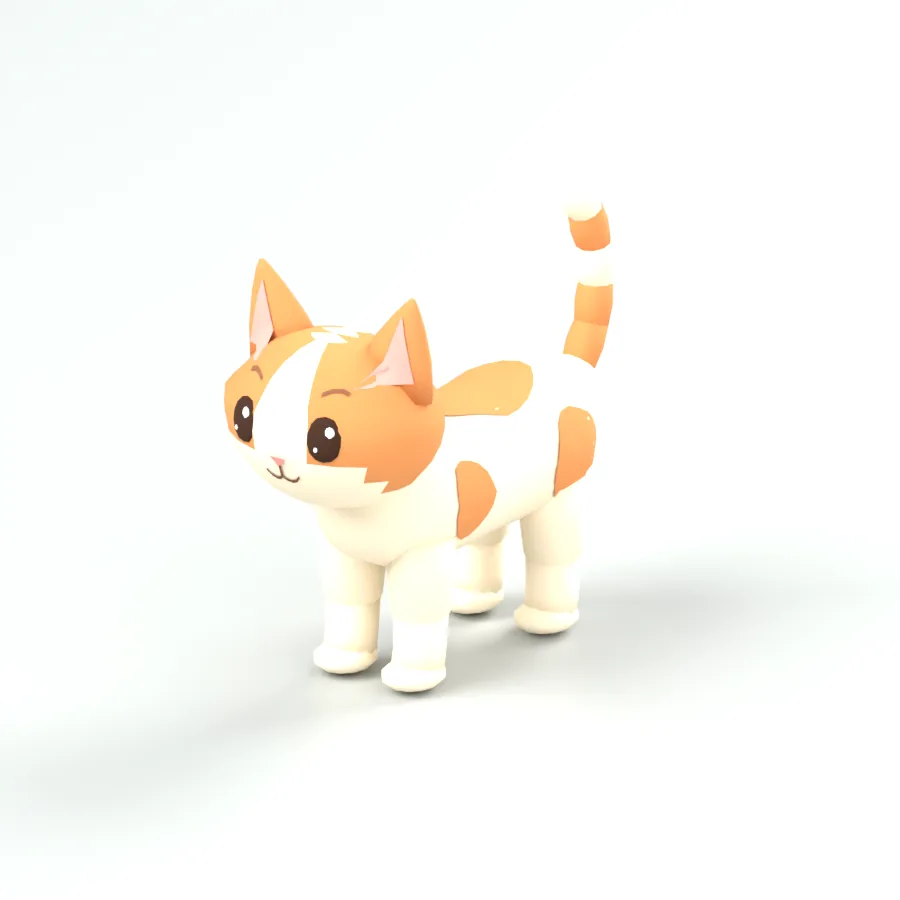
Orange-patched street cat, standing
Street cat
Robots in different colours and a cat on the street, at night
Robots at night

3D showcase

Spin it,
look closer.

Real models from the game. Drag to rotate; the cat walks, the robot rolls, the residents do yoga, sway in a hammock, play guitar and juggle, and the energy hub rotor spins.

  • Loading 3D models…

    Street cat2,570 triangles · 4 animations

  • Loading 3D models…

    Neighbourhood robot4,832 triangles

  • Loading 3D models…

    Resident with a laptop5,343 triangles

  • Loading 3D models…

    Resident doing yoga4,921 triangles

  • Loading 3D models…

    Resident in a hammock6,075 triangles

  • Loading 3D models…

    Guitar player6,457 triangles

  • Loading 3D models…

    Juggler5,529 triangles

  • Loading 3D models…

    Capsule home14,852 triangles

  • Loading 3D models…

    Community Energy Hub10,168 triangles

How we make our assets

Every home is built
from lines of code.

Every building, cat and resident in It's Your Town is produced by re-runnable Blender scripts, not by hand-clicking. Changing a colour, a window or a dimension is a single line, and the whole city keeps speaking the same visual language.

  1. 01Concept

    It starts with a visual reference: the feeling of a home, a cat character, a road texture. References inspire; geometry is always original.

  2. 02Plan

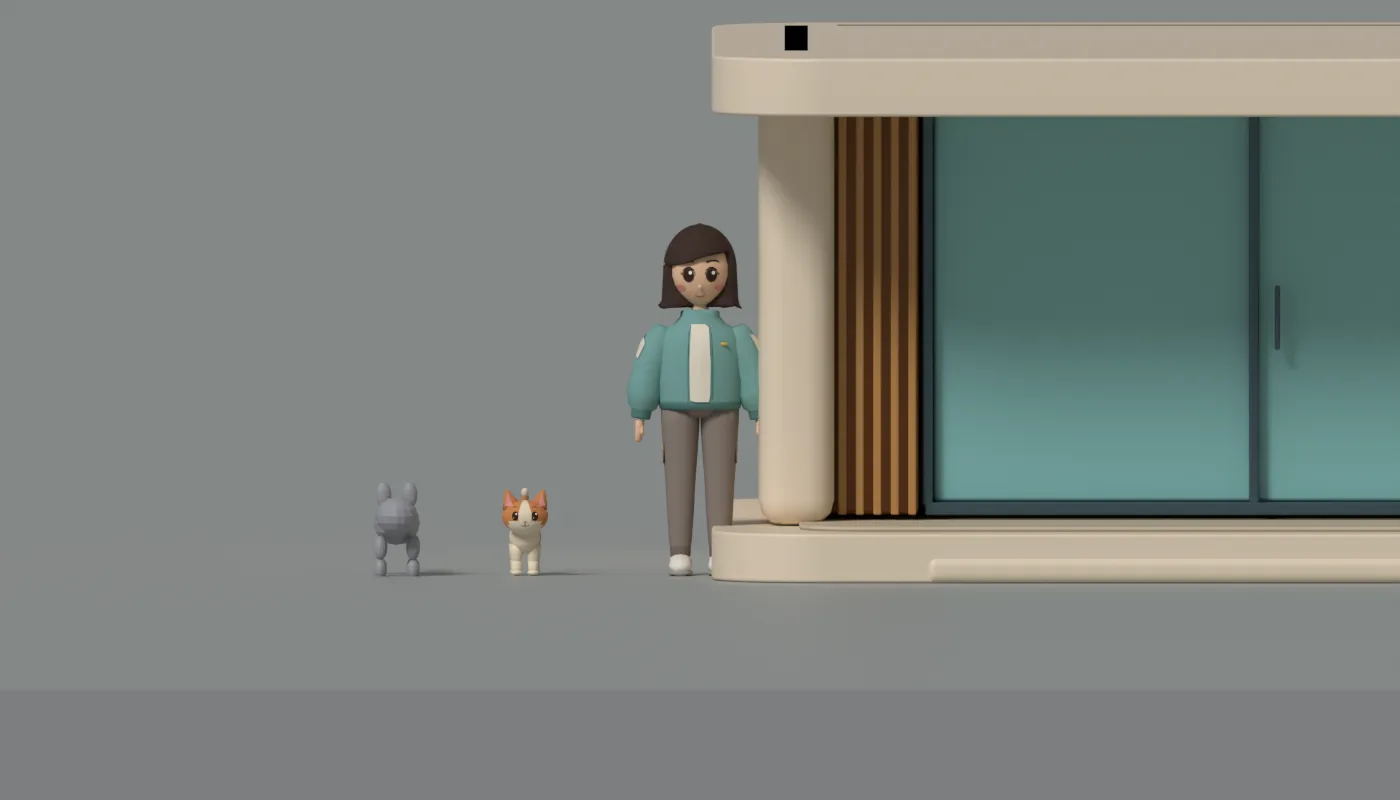
    Each asset gets a footprint, floor behaviour, material roles and a triangle budget. Scale is fixed: a person is 0.60 units, a ground floor 0.9.

  3. 03Scripted build

    A Python script running headless Blender builds the model, authors its animations and checks every frame that it stands on the ground.

  4. 04Verification

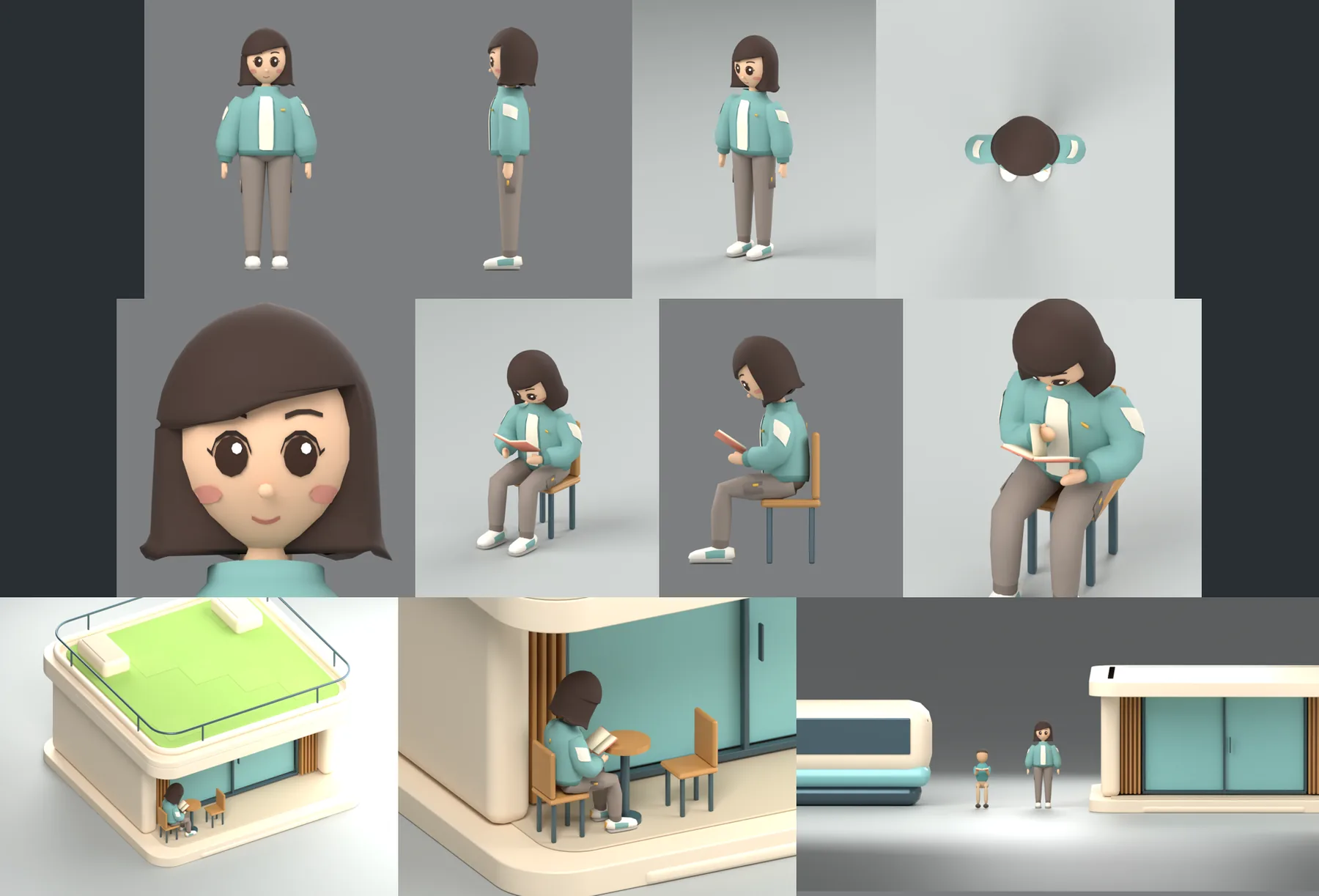
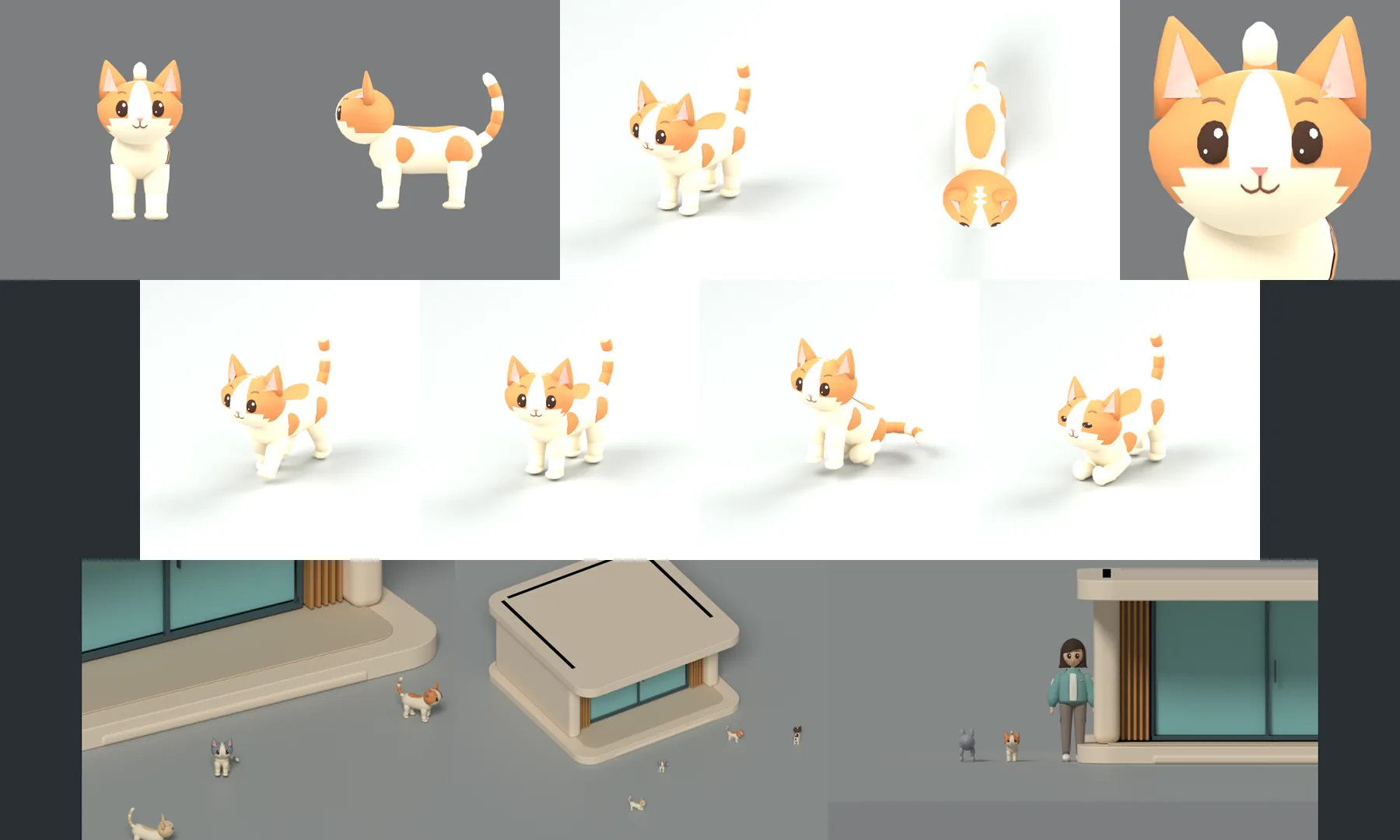
    Front, side, three-quarter and top renders, a scale line-up next to homes and trains, then a load test in the game's own 3D engine. Colours are tuned under the game's real day and night light.

  5. 05Delivery

    The approved model is frozen with a version number and recorded with a fingerprint (SHA256). A change is a new version; old versions are never deleted.

Front, side, top and pose render sheet for the resident
Turnaround · resident
Front, side, top and pose render sheet for the cat
Turnaround · cat
Scale line-up: cat, resident, home
Scale line-up
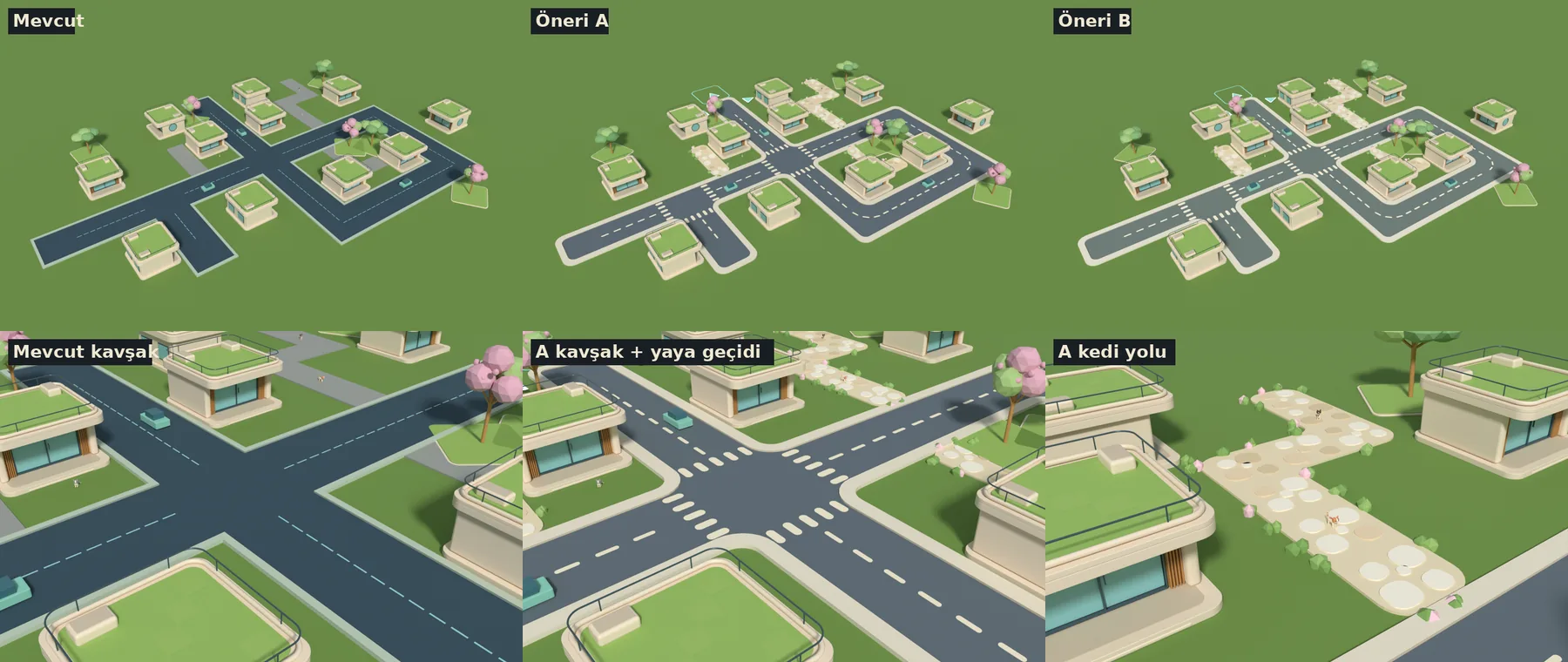
Road style: before and two proposals
Road style · before and after
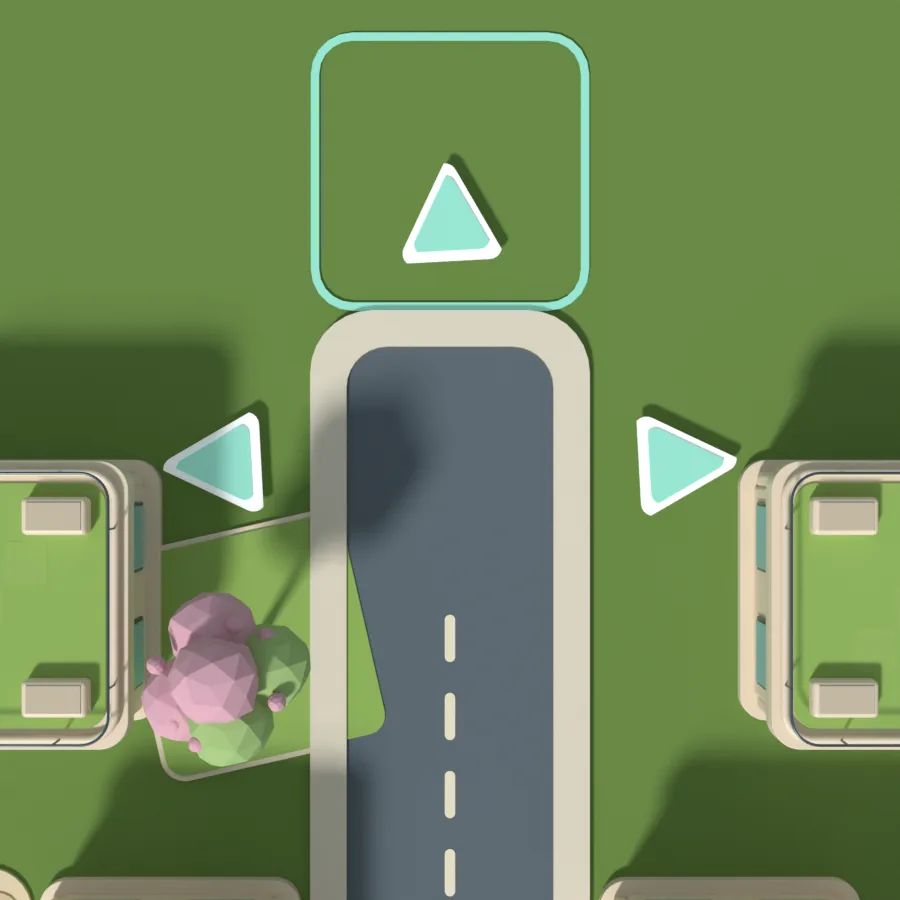
Continuation arrows at a road end
Road-end arrows
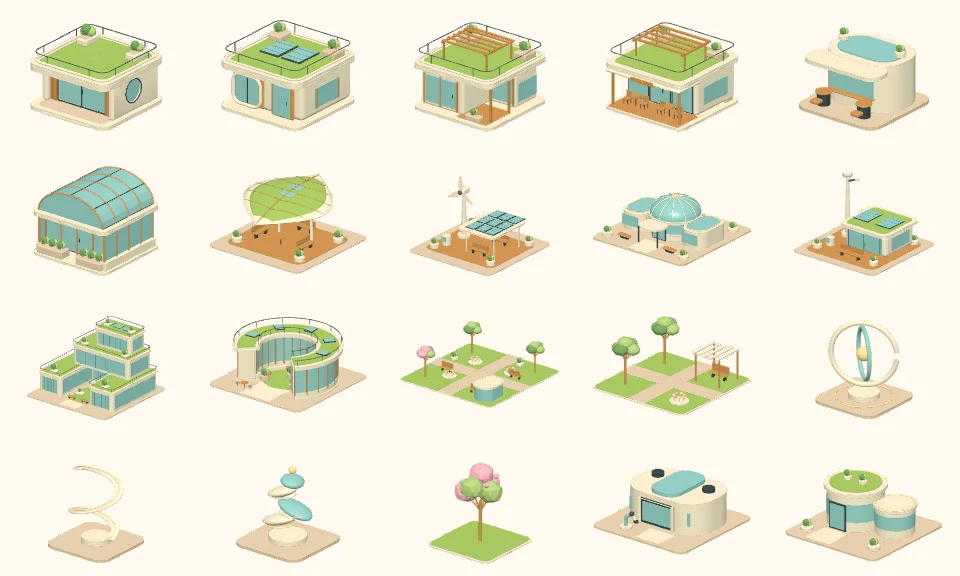
20 buildings from the in-game catalogue
20 buildings from the catalogue

Designed for the browser

  • A home uses 5 to 10 thousand triangles, a cat about 4 thousand.
  • One material and vertex colours instead of textures: small downloads, fast drawing.
  • Cats are assembled from shared parts: the same draw calls whether a region has one cat or fifty.
  • Residents are a single-mesh, single-material rigged model: one draw call each.

Visual language

Pastel, modern, rounded forms. Ivory bodies, honey-toned wood, opaque turquoise glass, green roof gardens and warm night lights. No grime, no noise, no photorealism; every silhouette reads from the game camera above.

It's Your Town is developed by Kivoai Creative with a small team of people and AI collaborators: the studio sets the creative direction and makes the calls; the asset workshop, game development and testing run as separate roles, and every step is recorded in shared documents.

Building with AI

Several models,
one project memory.

How several AI models, guided by a human and sharing one project memory, turned a small idea into a living browser game.

  1. 01Small and finishable

    Building placement and camera first, then floors, roads, bridges, vehicles and life in the city. Every feature was added on top of the existing experience and tried there.

  2. 02One shared project memory

    Models such as Codex, Claude and GLM helped with coding, bug analysis, optimisation and design. At the centre was not the chat history but the documents in the project folder.

  3. 03Checking as much as generating

    A model saying "done" was never enough: every change went through another review round, tests and a try-out in real, played cities.

  4. 04Decisions stay human

    How the game should feel, the scope and which suggestion to apply are human calls. The models sped things up; the documents kept that speed in order.

Read the full story

It's Your Town: Building a game together with AI

It's Your Town is a browser game I designed not only for building a city but for spending a little time inside the city you build. Placing buildings, laying out streets and watching the town grow is one part of the experience. The other part is listening to music while you watch that town through the eyes of a cat, a boat, a train or an airship.

My goal was never a big game prepared behind closed doors for years. I wanted to build a small but finishable experience first, then grow it with new buildings, animations and mechanics.

From an idea to a working town

The technical foundation is TypeScript, Three.js and Vite. The 3D world runs in the browser; models made in Blender are exported in a game-ready form and added to that world.

I split development into small steps. First came building placement and camera controls, then the floor system, roads, bridges, moving vehicles and life in the city. Every new feature was tried on top of the existing experience.

That approach shaped design decisions too. Instead of letting buildings scale freely, I chose a system where taller floors unlock as the city grows. It kept the technical complexity in check and let the town rise in a balanced way.

Several models, one shared project memory

In this project I did not use AI as a tool that writes code once, but as development partners I could lean on for different tasks. I worked with models such as Codex, Claude and GLM on coding, bug analysis, optimisation and design. Product direction, priorities and final decisions stayed with me.

The real challenge was not running models at the same time but making sure each could understand what the others had done. Each chat has its own memory; the project is one. So I put the documentation in the project folder, not the conversation history, at the centre of the process.

Markdown documents recorded the architecture, design decisions, task boundaries, test results and open issues. Document indexes showed where each piece of information lived, and short project memory notes let a new session catch up on the current state.

That way one model could review work another had left behind without me retelling the whole conversation. The result was a way of working built not on models constantly talking to each other, but on a shared, traceable record.

Checking matters as much as generating

I never accepted a model saying "done" as enough on its own. Passing changes through another review round, testing them and seeing them in the game became a core part of the process.

Performance work showed why. An optimisation can lower the processing load while breaking selection outlines, moving objects or fallback rendering. So we looked not only at FPS but at whether the behaviour players see stayed intact.

I used my own cities as test data. I reported visual problems with screenshots, videos and saved cities, so reviews happened not only on small, controlled examples but on towns that grew out of real play.

I steer, the contributions come from many places

In this way of working my role was not just writing prompts. Deciding how the game should feel, limiting scope, trying the results and choosing which suggestion to apply were at the centre of the process.

AI models sped development up; documentation helped keep that speed from turning into chaos. Keeping local development, pushing to GitHub and going live as separate stages also let me manage changes with more control.

Closing

For me, It's Your Town is both a game and an experiment in a way of making things: bringing together the contributions of different models around human direction and a shared project memory, to turn a small idea into a living experience.
Our dream

A town where people and nature
are at ease.

It's Your Town dreams of a hopeful city: walkable streets, shared spaces, clean transit and local making. Streets that belong to people and cats, not cars; neighbourhoods that produce their own energy, water and food. Not cold megastructures, but a human-scale life growing in a valley, along a river, among the trees.

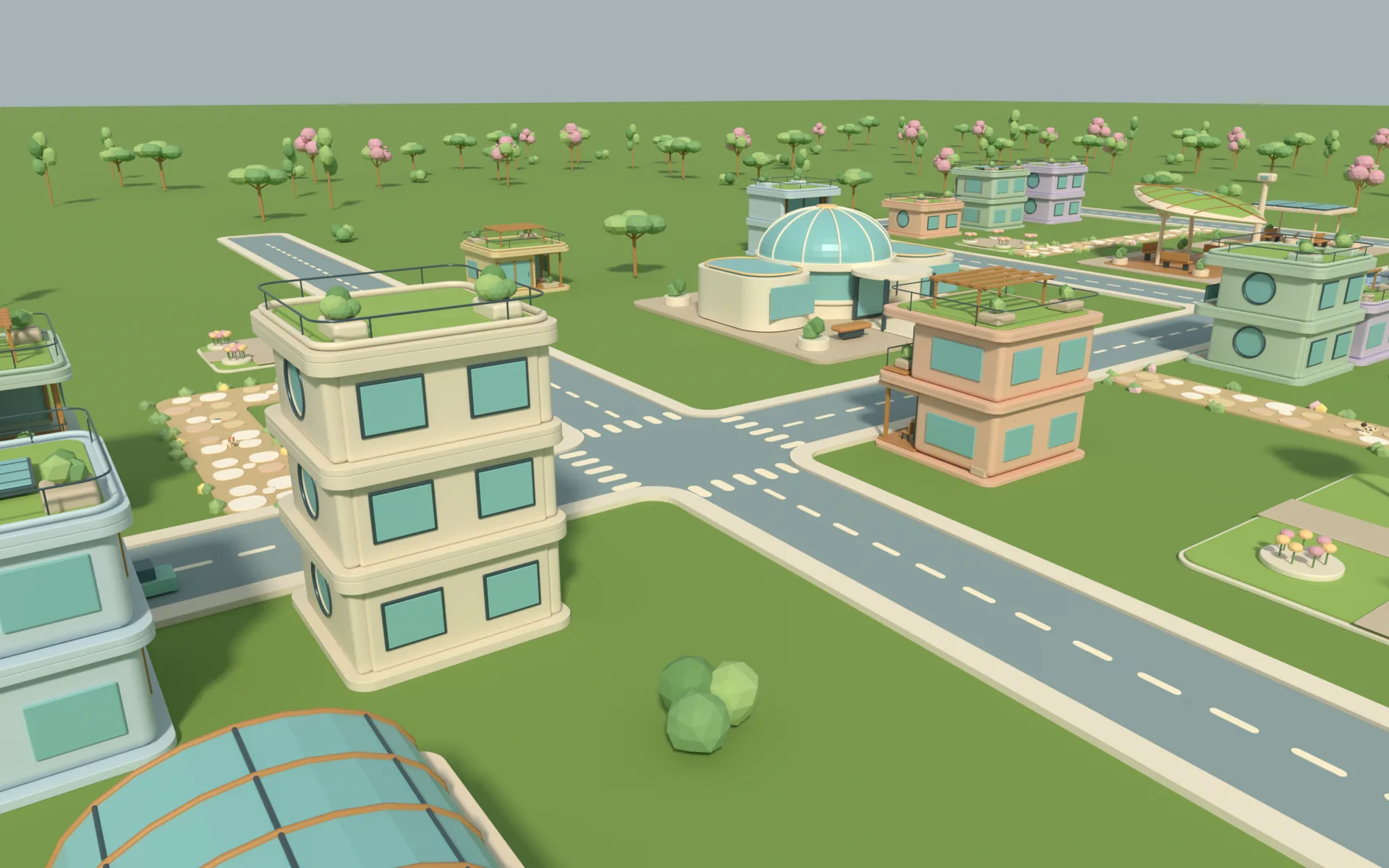
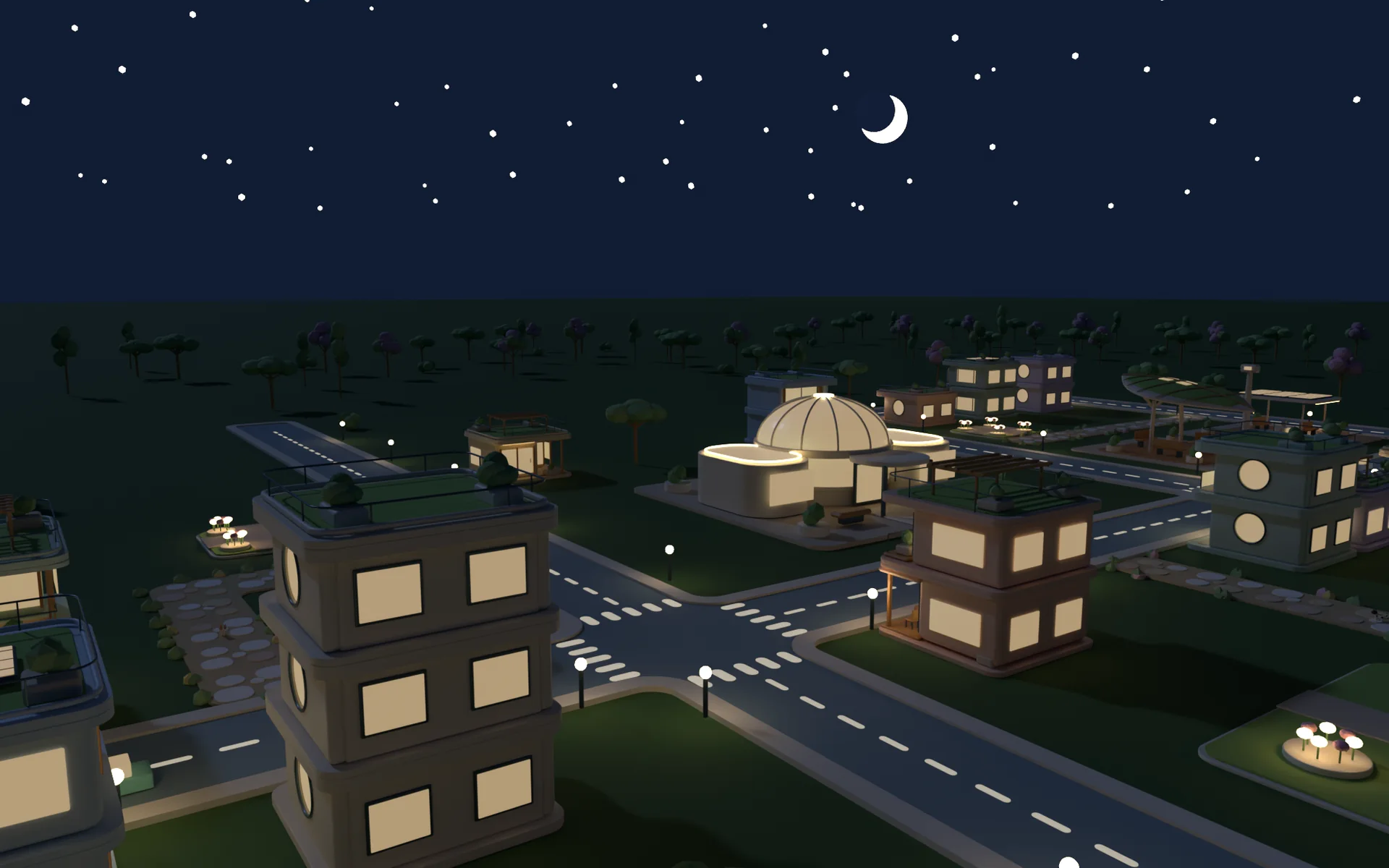
Street-level view of a junction with homes, crossings and the domed science centre Street-level night view with a crescent moon and stars

Where we are heading

  • Every home brings a life

    Each home you place brings a resident: reading on the veranda, yoga on the terrace, swinging in a hammock. As your town grows it feels livelier, not busier.

  • Streets belong to the living

    Today the cats explore the streets; in time residents may step out too, meet at cafés and rest in the parks.

  • Self-sufficient neighbourhoods

    Solar panels, wind turbines, greenhouses and roof gardens become part of each neighbourhood's story, not decoration.

  • A calm transit network

    Trains, river boats, a suspended rail and airships tie the town together; traffic flows quietly.

  • Open to everyone

    No install, no account, just a browser. We want the town to run smoothly on modest computers and phones too.

  • A game that grows together

    The town grows with the people who play it; new buildings, characters and stories take shape alongside players' cities.

Building a little world should be easy. And it should be a place you'd love to live in.

Your town is waiting.

Open it in your browser and place your first home. No install, no account.

Play ↗